Pentax vs. Olympus vs. Fujinon: Which Endoscopy System Is Right for Your Facility in 2026?
Discover the key differences between endoscopy and colonoscopy procedures. Expert guide for medical..

admin
February 24, 2026
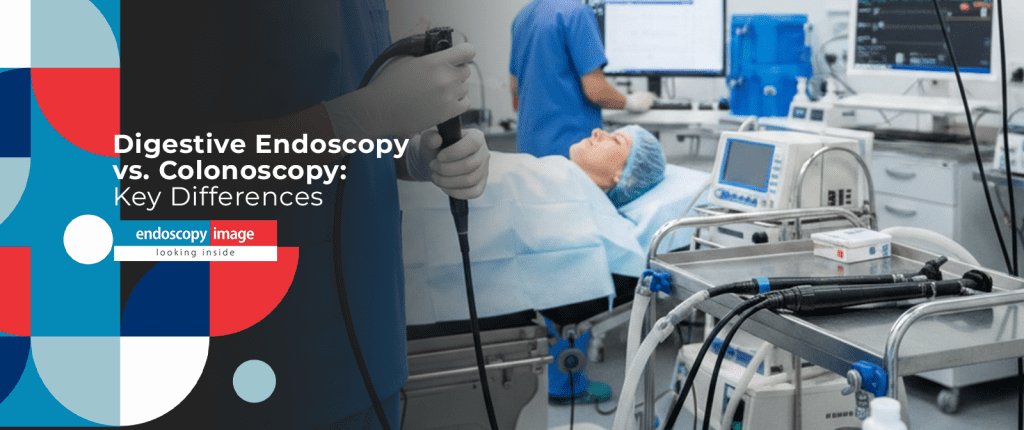
If you run a gastroenterology clinic or work as a GI specialist, you already know that the terms digestive endoscopy and colonoscopy are not interchangeable — yet confusion between these two procedures costs clinics time, money, and, most importantly, patient outcomes. Knowing exactly when to use each procedure and which equipment best supports your team is the foundation of a high-performing GI practice.
In this guide, we break down the critical differences between upper digestive endoscopy (EGD) and colonoscopy — covering anatomy, clinical indications, procedural workflow, and the specialized equipment each requires. Whether you are evaluating your current endoscopy suite or sourcing new scopes, this article gives you the clinical and operational clarity to make informed decisions.
By the end of this article, you will have a practical framework for matching the right GI procedure to the right patient — and the right equipment to the right procedure.
Digestive endoscopy — more precisely, upper gastrointestinal endoscopy or esophagogastroduodenoscopy (EGD) — is a minimally invasive procedure that uses a flexible endoscope to visualize the upper GI tract: the esophagus, stomach, and proximal duodenum. It is one of the most commonly performed procedures in gastroenterology worldwide.
Upper GI endoscopy requires a gastroscope — typically 9–10 mm in diameter — with high-definition imaging capabilities, narrow-band imaging (NBI), and a working channel for biopsy forceps or therapeutic tools. Video processors, light sources, and an insufflation system are also part of a complete endoscopy setup.
Explore our full lineup of endoscopy equipment designed for upper GI procedures.
A colonoscopy is a lower GI endoscopic procedure that visualizes the entire large intestine — from the rectum to the cecum — and often the terminal ileum. It is the gold standard for colorectal cancer screening and one of the most impactful preventive procedures in modern medicine.
A colonoscope is longer (typically 133–168 cm) and slightly wider than a gastroscope, engineered to navigate the twists of the colon safely. Modern colonoscopes feature variable stiffness, high-definition cameras, and wide-angle optics to maximize adenoma detection rates (ADR). CO₂ insufflation systems, water-jet capabilities, and snares or hemostasis tools round out a colonoscopy suite.
Browse our professional-grade colonoscopy equipment to upgrade your lower GI capabilities.
Upper endoscopy targets the esophagus, stomach, and duodenum. Colonoscopy targets the rectum, colon, and cecum. Both can reach the terminal ileum when needed for IBD evaluation, though this is more common during colonoscopy.
Gastroscopes are shorter (103 cm) and thinner. Colonoscopes are longer (133–168 cm) with variable stiffness sections. Using the wrong scope not only compromises visualization — it can increase procedural risk.
Upper endoscopy requires only a 6–8 hour fast. Colonoscopy demands a full bowel preparation protocol (low-fiber diet + laxative regimen). Inadequate prep is one of the top reasons for incomplete colonoscopies — making patient education as critical as equipment quality.
EGD typically takes 10–20 minutes with moderate sedation. Colonoscopy averages 20–45 minutes and may require deeper sedation, especially for therapeutic interventions. Anesthesia support and recovery space needs differ accordingly.
Both procedures support therapeutic interventions. Upper endoscopy handles band ligation for varices, stent placement, polypectomy, and hemostasis. Colonoscopy enables polyp removal, endoscopic mucosal resection (EMR), tattooing, and stent placement. The therapeutic channel size and accessory compatibility differ between scope types — always verify compatibility before purchasing accessories.
EGD and colonoscopy carry separate CPT codes with different reimbursement rates. Colonoscopy with polypectomy consistently reimburses at higher rates. Ensuring your documentation and equipment support accurate coding directly impacts your clinic’s financial performance.
Bidirectional endoscopy — performing both EGD and colonoscopy in the same session — is increasingly common for patients with unexplained anemia, weight loss, or suspected GI bleeding from an unknown source. This approach reduces patient burden (single bowel prep and sedation event) and improves diagnostic yield.
For clinics offering bidirectional endoscopy, having both high-quality gastroscopes and colonoscopes readily available is essential. Endoscopy Image offers both categories of equipment to help you build a complete, efficient GI suite.
Equipment selection is one of the highest-leverage decisions a clinic owner or GI department head can make. The right tools improve adenoma detection rates, reduce procedural complications, and shorten procedure times — all of which affect patient outcomes and practice profitability.
Digestive endoscopy and colonoscopy serve distinct clinical purposes, require different equipment, and demand different patient preparation protocols. Mastering the differences between upper GI endoscopy vs. colonoscopy is fundamental for any GI specialist — but equally important is ensuring your practice is equipped with tools that match your procedure volume, patient population, and clinical goals.
At Endoscopy Image, we specialize in helping GI practices, hospitals, and ambulatory surgery centers source the right endoscopy and colonoscopy equipment — from video processors and light sources to scopes and accessories. Whether you are expanding your suite or replacing aging equipment, we have the expertise and inventory to support your clinical mission.
➡️
The primary difference lies in anatomical reach and clinical purpose.
Upper digestive endoscopy (EGD) evaluates the esophagus, stomach, and proximal duodenum, while colonoscopy examines the rectum, colon, and cecum.
Upper endoscopy is commonly indicated for GERD, dysphagia, upper GI bleeding, or suspected peptic ulcer disease. Colonoscopy, on the other hand, is the gold standard for colorectal cancer screening and is frequently used to evaluate lower GI bleeding, chronic diarrhea, or inflammatory bowel disease.
In short, they are complementary procedures targeting different segments of the gastrointestinal tract.
➡️
The procedures require distinct scope designs and supporting systems.
Gastroscopes (used for upper GI endoscopy) are shorter and thinner, typically around 103 cm in length, optimized for upper tract navigation.
Colonoscopes are longer (133–168 cm) and engineered with variable stiffness to safely traverse the colon’s anatomical curves.
In addition, working channel size, accessory compatibility, insufflation systems (air vs. CO₂), and imaging capabilities (HD or 4K processors) must align with the intended procedure. Selecting the wrong equipment can compromise visualization, therapeutic capability, and procedural safety.
➡️ Bidirectional endoscopy — performing both EGD and colonoscopy in the same session — is recommended when evaluating:
Unexplained iron-deficiency anemia
Obscure GI bleeding
Significant unintentional weight loss
This approach improves diagnostic yield while reducing patient burden by combining bowel preparation and sedation into a single session. For practices offering this combined strategy, maintaining high-quality equipment for both upper and lower GI procedures is essential for efficiency and clinical accuracy.
Discover the key differences between endoscopy and colonoscopy procedures. Expert guide for medical..
Discover the key differences between endoscopy and colonoscopy procedures. Expert guide for medical..

Discover the key differences between endoscopy and colonoscopy procedures. Expert guide for medical..
Discover the key differences between endoscopy and colonoscopy procedures. Expert guide for medical..
Deprecated: File Theme without comments.php is deprecated since version 3.0.0 with no alternative available. Please include a comments.php template in your theme. in /home/endoscop/public_html/wp-includes/functions.php on line 6131