Category: Complete Equipment Guide

  • Laparoscopic Camera Systems: How to Choose the Right Setup for Your OR | Endoscopy Image

    Laparoscopic Camera Systems: How to Choose the Right Setup for Your OR | Endoscopy Image

    Laparoscopic Camera Systems: How to Choose the Right Setup for Your OR | Endoscopy Image

    laparoscopic-camera-system-surgical-or-setup

    Laparoscopic Camera Systems: How to Choose the Right Setup for Your OR

    A laparoscopic camera system is the visual foundation of every minimally invasive surgery. The surgeon’s ability to navigate anatomy, identify structures, and make precise decisions depends directly on the quality and reliability of the imaging system in front of them.

    Yet choosing the right system for your operating room is not straightforward. Resolution, light source compatibility, brand ecosystem, procedure types, and budget all play a role — and the differences between available systems are meaningful in practice.

    This guide covers the key components of a laparoscopic camera system, the specialties they serve, the leading platforms from Stryker and Karl Storz available through Endoscopy Image, and the practical questions every surgical center administrator should ask before purchasing.

    30+ Years of experience
    2 Leading OR brands
    7,000+ Facilities served worldwide
    660+ Installations in 2025

    Fundamentals

    What Is a Laparoscopic Camera System?

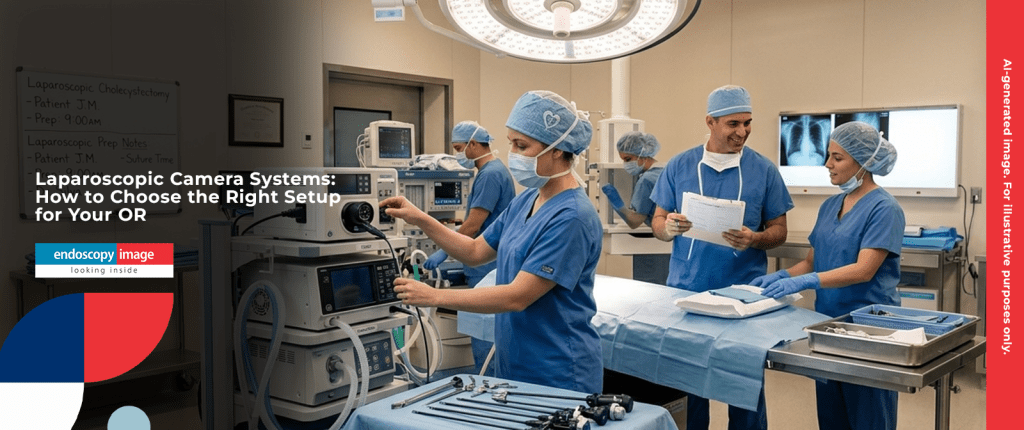
    A laparoscopic camera system — also referred to as a surgical camera system or endoscopic imaging system for the OR — is the core imaging infrastructure used in minimally invasive procedures. It captures and processes the visual feed from a rigid endoscope or laparoscope and displays it on a surgical monitor for the operating team.

    Unlike flexible endoscopy systems used in digestive endoscopy, laparoscopic systems work with rigid instruments inserted through small incisions (trocars). The camera head attaches directly to the eyepiece of the rigid scope and transmits the image to the camera control unit (CCU), which processes and outputs the signal to the monitor.

    Core components of a complete laparoscopic imaging setup

    1

    Camera Control Unit (CCU)

    The central processing unit of the imaging system. Receives the raw image signal from the camera head, processes it, and outputs to the monitor. Resolution, color rendering, and image enhancement technologies are determined here.

    2

    Camera Head

    Attaches to the eyepiece of the rigid scope. Contains the image sensor (CCD or CMOS). Must be compatible with the CCU it connects to — camera heads are generally brand- and series-specific.

    3

    Light Source

    Provides illumination through a fiber optic cable connected to the rigid scope. Xenon light sources are the established standard for their color temperature and brightness consistency. LED light sources are increasingly common in newer platforms.

    4

    Rigid Endoscope / Laparoscope

    The optical instrument inserted into the body cavity. Available in different diameters (typically 5mm or 10mm) and viewing angles (0°, 30°, 45°). Must be compatible with the camera head attached to it.

    5

    Surgical Monitor

    Displays the processed image for the surgical team. Medical-grade monitors are designed for the OR environment — appropriate brightness levels, screen coatings, and signal compatibility with the CCU output.

    💡 Key principle A laparoscopic imaging system is only as strong as its weakest component. A 4K camera control unit paired with an outdated light source or a mismatched rigid scope will not deliver its full imaging potential. System components should be selected and verified together.

    Applications

    Which Surgical Specialties Use Laparoscopic Camera Systems?

    Video surgery equipment built around laparoscopic imaging platforms is used across a wide range of minimally invasive surgical specialties. The same camera system can often serve multiple procedure types when paired with the appropriate rigid scope.

    🫁

    Laparoscopy

    Abdominal and pelvic procedures — cholecystectomy, appendectomy, hernia repair, bariatric surgery

    🦴

    Arthroscopy

    Joint visualization and surgery — knee, shoulder, hip, wrist procedures

    🫀

    Gynecology

    Laparoscopic hysterectomy, myomectomy, endometriosis treatment, tubal procedures

    🫘

    Urology

    Cystoscopy, ureteroscopy, nephrectomy, prostatectomy, laparoscopic urology

    🫁

    Thoracoscopy

    VATS (video-assisted thoracic surgery) — lung resection, pleural procedures

    🧠

    Neurosurgery

    Endoscopic procedures — ventricular, spinal, and skull base approaches

    The breadth of specialties served by modern surgical camera platforms makes them one of the most strategically important equipment investments for any surgical center. A well-chosen system can support multiple OR suites and procedure types across the same facility.


    Technical Guide

    HD vs. 4K Laparoscopic Imaging: What Actually Changes in the OR

    The shift from HD to 4K in surgical camera systems follows the same resolution trajectory as consumer displays — but in the OR, the practical implications go beyond pixel count.

    Feature HD Systems 4K Systems
    Resolution 1920 × 1080 pixels 3840 × 2160 pixels (4× HD)
    Anatomical detail Strong for standard laparoscopy Enhanced fine tissue and vascular detail
    Monitor requirement Compatible with HD surgical monitors Requires 4K-capable surgical monitor
    Typical use case General MIS, arthroscopy, standard laparoscopy Complex dissection, high-precision procedures
    Secondary market availability High Moderate
    Example systems Stryker 1288, 1488, 1588 · Karl Storz IMAGE 1 Stryker 1688 AIM 4K
    ⚠ Important note 4K resolution requires a compatible 4K surgical monitor to render the full image quality. Installing a 4K camera system on an existing HD monitor will not deliver the resolution benefit. Factor monitor compatibility into your system planning.

    Brand Overview

    Stryker Surgical Camera Systems

    Stryker is one of the most widely adopted brands in minimally invasive surgical imaging globally. Their camera systems are designed for demanding OR environments, with an emphasis on image quality, system integration, and durability across high-volume surgical settings.

    All Stryker systems available through Endoscopy Image are pre-owned units sourced through lawful secondary market channels.

    System Resolution Key Features Best For Positioning
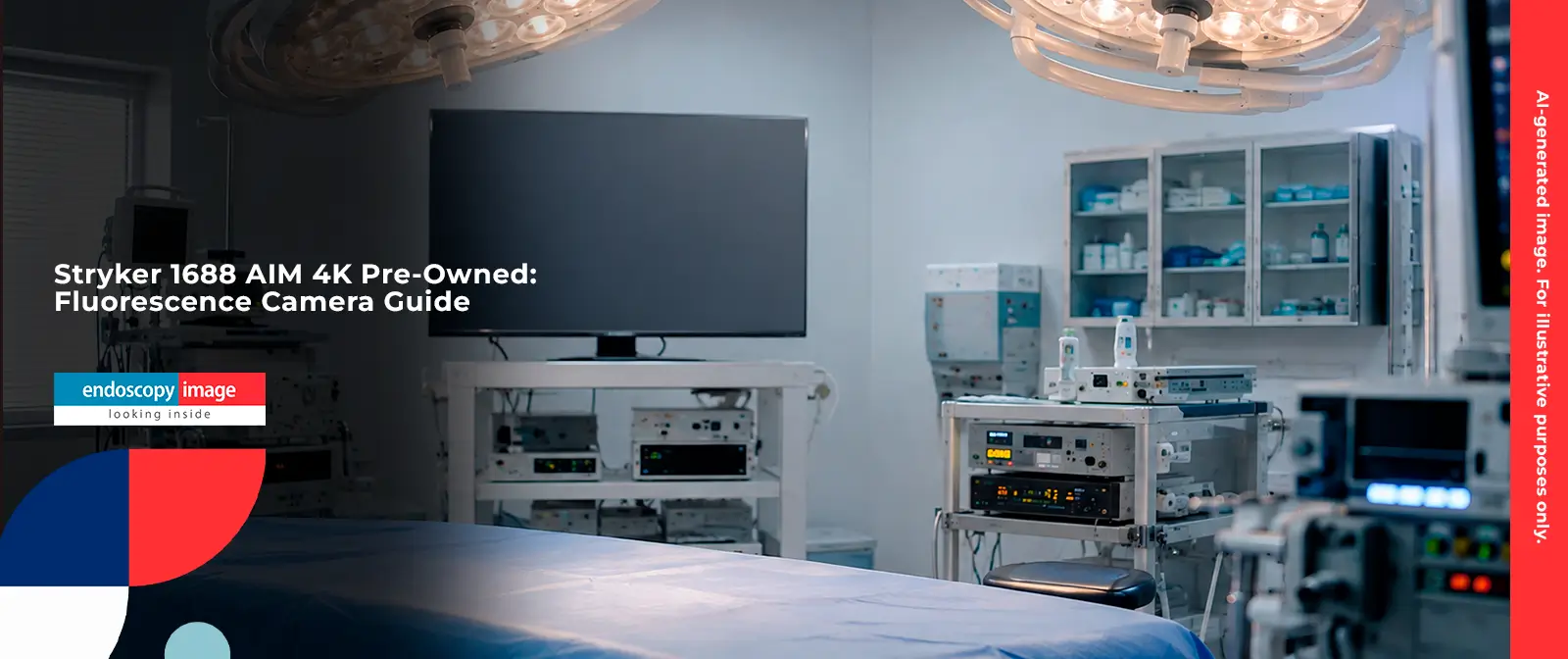
    Stryker 1688 AIM 4K 4K UHD Fluorescence Imaging, AutoLight adaptive brightness, full Stryker platform integration High-complexity laparoscopy, advanced MIS Advanced
    Stryker 1588 Full HD High color fidelity, precise anatomical detail, robust OR integration Laparoscopy, arthroscopy, general MIS High Performance
    Stryker 1288 HD Broad Stryker rigid scope compatibility, multi-specialty versatility, wide installed base Laparoscopy, arthroscopy, multi-specialty OR Proven Reference
    Stryker 1488 HD Compact design, reliable imaging, compatible with Stryker rigid endoscopes MIS centers seeking cost-effective performance Cost-Benefit

    Stryker 1688 AIM 4K — Fluorescence Imaging explained

    The Stryker 1688 AIM 4K includes Fluorescence Imaging capability. This technology, when used with a compatible fluorescent agent and appropriate filter, enables visualization of tissue perfusion and certain anatomical structures that are not readily visible under standard white light. The clinical applicability of fluorescence imaging depends on the procedure type, regulatory clearance in the relevant market, and the specific fluorescent agent used. It is not a standard feature of all laparoscopic procedures.


    Brand Overview

    Karl Storz Surgical Imaging Systems

    Karl Storz has built its reputation on precision optical engineering. The brand is closely associated with high-quality rigid endoscopes and laparoscopes — and their imaging systems are designed to integrate tightly with that optical ecosystem.

    KS
    Karl Storz IMAGE 1
    High-performance endoscopic imaging — multi-specialty OR
    • Image quality: High-definition imaging with advanced color optimization — precise tissue differentiation for the surgical field
    • Integration: Designed to work seamlessly with the full Karl Storz rigid endoscope and laparoscope lineup
    • Specialties supported: Laparoscopy · Urology · Gynecology · Orthopedics · General Surgery
    • Versatility: Multi-specialty capability makes the IMAGE 1 a strong choice for surgical centers performing procedures across different departments

    Karl Storz’s strength lies in the coherence of their system: camera, rigid scope, and light source are engineered to work together. Facilities that invest in Storz rigid scopes benefit most from pairing them with the IMAGE 1 system. Cross-brand mixing (Storz scope with non-Storz camera) may work in some configurations but is not the manufacturer’s recommended setup and can affect image quality.


    Comparison

    Stryker vs. Karl Storz: A Practical Comparison

    Both Stryker and Karl Storz are established leaders in minimally invasive surgical imaging. The right choice for a given facility depends less on brand prestige and more on practical factors: specialty mix, existing equipment, surgeon preference, and procurement budget.

    Criterion Stryker Karl Storz
    Resolution range HD to 4K UHD (1288 → 1688 AIM) HD (IMAGE 1)
    Fluorescence imaging Available on 1688 AIM 4K Not listed in available catalog
    Specialty breadth Laparoscopy, arthroscopy, general MIS Laparoscopy, urology, gynecology, orthopedics
    Rigid scope ecosystem Broad Stryker scope line Extensive Storz rigid endoscope catalog
    Secondary market availability Strong Strong
    Best when Center needs 4K or fluorescence; broad multi-specialty MIS Center is already in the Storz ecosystem or prioritizes urology/gynecology
    💡 Practical note If your surgical center already has Karl Storz rigid scopes in active use, the IMAGE 1 system is likely the most coherent upgrade path — it is engineered for that ecosystem. If you are building a new OR or expanding into arthroscopy alongside laparoscopy, Stryker’s multi-specialty scope range gives you broader coverage from a single platform.

    Decision Guide

    Which Laparoscopic Camera System Is Right for Your Surgical Center?

    Choose Stryker 1688 AIM 4K

    When 4K and fluorescence are clinical priorities

    High-complexity laparoscopy, advanced abdominal surgery, centers where enhanced anatomical visualization is part of the surgical protocol. Requires compatible 4K monitor.

    Choose Stryker 1588 or 1288

    When HD performance and proven versatility are the priority

    General laparoscopy, arthroscopy, multi-specialty surgical centers. Strong installed base and secondary market availability. Reliable cost-benefit positioning.

    Choose Karl Storz IMAGE 1

    When your OR is already in the Storz ecosystem

    Facilities with existing Storz rigid scopes in urology, gynecology, or laparoscopy. The IMAGE 1 is optimized for Storz optics and delivers best results in that configuration.

    Choose Stryker 1488

    When budget efficiency is the primary constraint

    Smaller surgical centers, satellite ORs, or facilities adding a second procedure room. Compact, reliable, compatible with the Stryker scope line.


    Before You Buy

    6 Things to Verify Before Purchasing a Laparoscopic Camera System

    Check 01

    Confirm camera head and CCU compatibility

    Camera heads are typically series-specific. A Stryker 1688 camera head is not interchangeable with a 1288 CCU. Verify the exact pairing before purchasing any component separately.

    Check 02

    Match the light source to your system

    Xenon light sources are the standard for laparoscopy. Confirm the light source type, wattage, and cable compatibility with your rigid scope. A mismatched light source directly affects image brightness and color.

    Check 03

    Verify monitor compatibility if upgrading to 4K

    A 4K CCU requires a 4K surgical monitor to deliver its full resolution. If your OR monitors are HD, upgrading to the Stryker 1688 without also upgrading the monitor will not yield 4K imaging.

    Check 04

    Check rigid scope compatibility

    Rigid scopes (laparoscopes, arthroscopes) from different manufacturers are not always interchangeable at the camera head level. Confirm that your existing or planned rigid scopes are compatible with the camera system you select.

    Check 05

    Ask about sourcing and equipment history

    For any pre-owned system, request documentation of its origin and condition. A reputable supplier will be transparent. If provenance cannot be confirmed, that is a signal to look elsewhere.

    Check 06

    Plan the full OR tower, not just the camera

    A complete laparoscopic OR tower typically includes: CCU + camera head, light source + fiber cable, insufflator (for laparoscopy), monitor(s), and a medical cart. Purchasing components in isolation without planning the full setup creates gaps.


    About Us

    Endoscopy Image: Pre-Owned Video Surgery Equipment Worldwide

    Endoscopy Image, operated by Are Medical LLC and headquartered in Key Biscayne, Miami, Florida, has been supplying hospitals, surgical centers, and clinics with medical equipment for over 30 years. We carry pre-owned video surgery equipment from Stryker and Karl Storz, as well as endoscopy equipment, video gastroscopes, and colonoscopy equipment from Olympus (refurbished), Pentax, and Fujinon.

    All equipment we sell consists of pre-owned products acquired through lawful secondary market channels. We operate with full transparency about sourcing and condition — worldwide delivery available.

    Looking for a Laparoscopic Camera System for Your OR?

    Browse our catalog of pre-owned Stryker and Karl Storz video surgery equipment and contact our team to discuss availability, compatibility, and pricing. Worldwide delivery available.


    FAQ

    Frequently Asked Questions

    What is included in a laparoscopic camera system?

    A complete laparoscopic camera system typically includes a camera control unit (CCU), a camera head, a light source, and a fiber optic cable. For a fully operational OR setup, you also need a compatible rigid endoscope or laparoscope and a surgical monitor. All components must be compatible with each other — camera heads and CCUs are generally brand- and series-specific.

    What is the difference between the Stryker 1688 AIM 4K and the Stryker 1288?

    The Stryker 1688 AIM 4K is a more recent platform offering 4K UHD resolution and Fluorescence Imaging capability, designed for high-complexity minimally invasive procedures. The Stryker 1288 is an HD camera system with a broad installed base, widely used across laparoscopy, arthroscopy, and general MIS. The 1288 is a proven, cost-effective option; the 1688 is suited for centers where 4K imaging and fluorescence are clinical priorities and a compatible 4K monitor is available.

    Can I use a Stryker camera head with a Karl Storz rigid scope?

    In some cases, cross-brand adapters exist that allow camera heads from one manufacturer to attach to rigid scopes from another. However, this is not a manufacturer-recommended configuration and may affect image quality, color rendering, or optical performance. For best results, it is generally advisable to keep camera and scope within the same brand ecosystem, or to confirm compatibility specifically with your supplier before purchasing.

    Is pre-owned laparoscopic camera equipment a reliable option for surgical centers?

    Pre-owned surgical camera systems sourced through verified secondary market channels are used by surgical centers around the world as a cost-effective alternative to new equipment. The key factors are the reliability of the supplier, transparency about the equipment’s origin and condition, and confirmation of functional status prior to purchase. As with any medical device procurement, due diligence on sourcing is essential.

    Does Endoscopy Image supply laparoscopic camera systems internationally?

    Yes. Endoscopy Image supplies pre-owned video surgery equipment — including Stryker and Karl Storz camera systems — to hospitals, surgical centers, and resellers worldwide. The company is headquartered in Key Biscayne, Miami, Florida. For availability, pricing, and shipping details, contact the team directly at endoscopyimage.com.

    Blog & Articles

  • Refurbished Olympus Endoscopy Systems: EVIS X1, EXERA III & EXERA II Compared | Endoscopy Image

    Refurbished Olympus Endoscopy Systems: EVIS X1, EXERA III & EXERA II Compared | Endoscopy Image

    Refurbished Olympus Endoscopy Systems: EVIS X1, EXERA III & EXERA II Compared | Endoscopy Image

    refurbished olympus endoscopy system evis platform procedure room

    Refurbished Olympus Endoscopy Systems: EVIS X1, EXERA III, and EXERA II — Which One Is Right for Your Clinic?

    Olympus is the most widely recognized name in digestive endoscopy worldwide — and for good reason. For decades, the EVIS platform has set the benchmark for image quality, scope ergonomics, and clinical workflow in both upper and lower GI endoscopy.

    If you are evaluating a refurbished Olympus endoscopy system for your facility, the most important decision is not just which brand to buy — it is which generation of platform best fits your procedure volume, budget, and clinical requirements.

    This guide compares the three Olympus EVIS platforms available through Endoscopy Image: the EVIS X1, the EVIS EXERA III (CV-190), and the EVIS EXERA II (CV-170). All systems are refurbished — pre-owned units sourced through lawful secondary market channels.

    30+ Years of experience
    3 Olympus EVIS generations
    7,000+ Clinics served worldwide
    660+ Installations in 2025

    Brand Overview

    Why Olympus Remains the Market Standard in Digestive Endoscopy

    In the world of endoscopy equipment, Olympus occupies a unique position. The EVIS platform has gone through continuous evolution since the early days of video endoscopy — and each generation has maintained backward-informed engineering: scopes and processors are designed to work as an integrated system, not as interchangeable components.

    This matters in practice. A facility that builds around an Olympus platform benefits from a tightly engineered ecosystem: compatible scopes, consistent image processing, and a large installed base that supports parts availability and technical familiarity.

    What makes Olympus platforms consistently reliable

    • Platform coherence: Processors and scopes are designed together — image processing, illumination, and scope mechanics work as a system
    • Proven clinical track record: Olympus systems are used in leading hospitals, academic centers, and endoscopy suites globally
    • NBI (Narrow Band Imaging): Olympus’s proprietary optical contrast technology — available across all three platforms — improves mucosal and vascular visualization
    • Large installed base: Widespread adoption means strong parts availability and broad technical support in the secondary market
    • Scope breadth: From standard diagnostic gastroscopes to therapeutic and magnification scopes, each platform supports a full range of procedures
    ⚠ Important note All Olympus endoscopy systems sold by Endoscopy Image are refurbished — pre-owned units acquired through lawful secondary market channels. We do not perform in-house repairs or refurbishment. Our role is sourcing, vetting, and connecting buyers with the right systems.

    Platform Comparison

    The Three Olympus EVIS Platforms: A Side-by-Side Overview

    Olympus has developed the EVIS platform through three major generations, each with a different positioning in the market. Here is a direct comparison before going into detail on each.

    Latest Generation

    EVIS X1

    Processor: CV-1500 · Light source: CLV-190
    • 4K UHD resolution
    • TXI — Texture & Color Enhancement
    • RDI — Red Dichromatic Imaging
    • NBI — Narrow Band Imaging
    • AI-assisted lesion detection
    • Highest diagnostic capability
    Market Reference

    EVIS EXERA III

    Processor: CV-190 · Light source: CLV-190
    • Full HD resolution
    • NBI — Narrow Band Imaging
    • Compatible with full 190-series scopes
    • Strong installed base worldwide
    • Proven in high-volume clinical settings
    • Best cost-performance balance
    Consolidated Value

    EVIS EXERA II

    Processor: CV-170 · Scopes: GIF-H170, CF-H170
    • Reliable HD imaging
    • Proven operational availability
    • Lower acquisition cost
    • Suitable for moderate-volume centers
    • Strong secondary market availability
    • Straightforward to operate and maintain

    Full Feature Comparison Table

    Feature EVIS X1 (CV-1500) EVIS EXERA III (CV-190) EVIS EXERA II (CV-170)
    Generation Latest Current Reference Consolidated
    Resolution 4K UHD Full HD HD
    NBI ✓ Yes ✓ Yes ✗ No
    TXI (Texture & Color Enhancement) ✓ Yes ✗ No ✗ No
    RDI (Red Dichromatic Imaging) ✓ Yes ✗ No ✗ No
    AI-assisted lesion detection ✓ Yes (supported) ✗ No ✗ No
    Compatible gastroscopes EVIS X1 line GIF-H190, GIF-HQ190 GIF-H170
    Compatible colonoscopes EVIS X1 line CF-H190, PCF-H190 CF-H170
    Best suited for Advanced diagnostic & therapeutic endoscopy High-volume clinical endoscopy Moderate-volume or budget-sensitive centers
    Condition (Endoscopy Image) Refurbished Refurbished Refurbished

    Deep Dive

    EVIS X1 (CV-1500): The Most Advanced Olympus Platform

    The EVIS X1 represents Olympus’s most sophisticated endoscopy platform to date. Built around the CV-1500 video processor, it was designed for high-complexity diagnostic and therapeutic endoscopy environments where image quality and lesion characterization are clinical priorities.

    Key technologies

    • 4K UHD resolution: Four times the pixel density of HD, enabling magnification-level detail without a dedicated magnifying endoscope in many cases
    • TXI — Texture and Color Enhancement Imaging: Enhances surface texture and color rendering of mucosal tissue, improving differentiation of subtle lesions
    • RDI — Red Dichromatic Imaging: Improves visualization of bleeding sources and hemostasis by enhancing the contrast of red-spectrum tissue
    • NBI — Narrow Band Imaging: Olympus’s established optical contrast technology for vascular and mucosal pattern analysis
    • AI support: The EVIS X1 platform includes AI-supported functionalities for endoscopy, as specified by Olympus. Availability and regulatory clearance vary by market and software version.
    💡 Who is this for? The EVIS X1 is a platform suited for high-complexity endoscopy environments where advanced imaging technologies — 4K, TXI, RDI, and NBI — are part of the clinical workflow. As with any medical device, clinical applicability depends on the facility’s protocols, regulatory environment, and procedure types.

    Deep Dive

    EVIS EXERA III (CV-190): The Market-Reference Platform

    If there is one refurbished Olympus endoscopy system that represents the broadest combination of performance, compatibility, and availability in the secondary market, it is the EVIS EXERA III built around the CV-190 processor.

    Recognized globally as the standard platform for digestive endoscopy, the CV-190 has been adopted in clinical settings ranging from private outpatient centers to large academic hospitals. Its longevity in the market has created a deep ecosystem of compatible scopes and accessories.

    Key features of the EVIS EXERA III

    • Full HD imaging: Clear, detailed image output for both upper and lower GI endoscopy
    • NBI — Narrow Band Imaging: Optical contrast technology for vascular and pit pattern analysis — standard on all CV-190 systems
    • 190-series scope compatibility: Pairs with the GIF-H190 and GIF-HQ190 gastroscopes, and the CF-H190 and PCF-H190 colonoscopes
    • GIF-HQ190 magnification support: When paired with the HQ190 gastroscope, the platform supports optical magnification for detailed early lesion analysis
    • CLV-190 light source: Designed to work in tandem with the CV-190 for optimized and consistent illumination

    EVIS EXERA III scope lineup

    Scope Model Type Working Channel Key Feature Application
    GIF-H190 Video Gastroscope 2.8 mm HD + NBI Upper GI — esophagus, stomach, duodenum
    GIF-HQ190 Video Gastroscope 2.8 mm HD + NBI + optical magnification Upper GI — enhanced early lesion detection
    CF-H190 Video Colonoscope 3.2 mm HD + NBI Lower GI — full colonoscopy
    PCF-H190 Video Colonoscope 3.2 mm HD + NBI — slim design Lower GI — pediatric / difficult colonoscopy
    ✓ Best all-around choice For most endoscopy centers — from busy outpatient clinics to mid-size hospital units — the EVIS EXERA III (CV-190) delivers the best combination of clinical capability, scope availability, and secondary market value as a refurbished Olympus system.

    Deep Dive

    EVIS EXERA II (CV-170): Proven Performance at a Lower Investment

    The EVIS EXERA II platform — centered on the CV-170 processor — represents an older Olympus generation that remains in active use across a large number of endoscopy facilities worldwide. It is a refurbished endoscopy equipment option that makes strong sense for specific scenarios.

    When the EVIS EXERA II is the right call

    • Clinics establishing a first endoscopy suite with a controlled budget
    • Centers adding a second procedure room to existing infrastructure
    • Facilities with lower weekly procedure volume where 4K or advanced optical enhancement is not a clinical priority
    • Settings where team familiarity with the CV-170 platform already exists

    The CV-170 system, combined with the GIF-H170 gastroscope and CF-H170 colonoscope, forms a complete, proven setup for diagnostic upper and lower GI endoscopy. Image quality is reliable HD. The platform is straightforward to operate and has a deep installed base globally.

    ⚠ One thing to consider The EVIS EXERA II does not support NBI or advanced optical contrast technologies. For facilities where mucosal pattern analysis is a regular clinical need, the EVIS EXERA III (CV-190) is the more appropriate choice.

    Decision Guide

    Which Refurbished Olympus System Is Right for Your Clinic?

    The right platform depends on four factors: procedure complexity, weekly volume, budget, and whether imaging enhancement technologies (NBI, TXI, AI) are a clinical priority. Here is a practical decision guide.

    Choose EVIS X1

    For centers where advanced diagnostics are a priority

    High-complexity endoscopy, academic hospitals, tertiary referral units, centers performing ESD, advanced resections, or AI-assisted protocols.

    Choose EVIS EXERA III

    For most clinical endoscopy centers

    Busy outpatient clinics, hospital endoscopy units, and multi-room GI suites that need proven HD imaging with NBI and a wide scope ecosystem.

    Choose EVIS EXERA II

    For budget-sensitive or lower-volume settings

    First procedure rooms, satellite clinics, or centers adding capacity without requiring advanced optical imaging enhancement.


    Before You Buy

    5 Things to Verify When Buying a Refurbished Olympus System

    Check 01

    Confirm platform generation and processor model

    EVIS X1, EXERA III, and EXERA II scopes are NOT cross-compatible. Confirm the exact processor model (CV-1500, CV-190, or CV-170) before selecting scopes.

    Check 02

    Verify scope condition specifically

    For any scope, ask about the condition of the insertion tube, bending section, and working channel — these are the highest-wear components on any endoscope.

    Check 03

    Confirm the light source is included and compatible

    The CLV-190 light source is designed to work with the CV-190 processor. Buying a processor without the matched light source creates immediate compatibility issues.

    Check 04

    Ask about sourcing and documentation

    A reputable supplier will provide documentation of the equipment’s origin. Absence of sourcing transparency is a red flag regardless of how attractive the price appears.

    Check 05

    Think about the complete system, not just the processor

    Processor + matched light source + compatible scopes + monitor = a functional endoscopy setup. Plan the full system before purchasing any individual component.

    Check 06

    Consider parts and accessory availability

    The CV-190 platform has a deeper secondary market than the CV-1500. If long-term parts availability matters, factor this into your platform decision.


    About Us

    Endoscopy Image: Your Source for Refurbished Olympus Equipment

    Endoscopy Image, operated by Are Medical LLC and headquartered in Key Biscayne, Miami, Florida, has been supplying hospitals, clinics, and surgical centers with medical equipment for over 30 years — including 15+ years of operation in the United States.

    We carry refurbished Olympus systems across all three EVIS generations, as well as pre-owned video gastroscopes and colonoscopy equipment from the 190-series and 170-series scope lines.

    All equipment we sell consists of pre-owned products acquired through lawful secondary market channels. We operate with full transparency about what we source and sell — worldwide delivery available.

    Ready to Find the Right Olympus System for Your Facility?

    Browse our full catalog of refurbished Olympus endoscopy systems and contact our team to discuss availability, platform compatibility, and pricing. Worldwide delivery available.


    FAQ

    Frequently Asked Questions

    What does “refurbished Olympus endoscopy system” mean?

    A refurbished Olympus endoscopy system is a pre-owned unit that has been acquired through lawful secondary market channels and made available for resale. At Endoscopy Image, we do not perform in-house repairs or refurbishment. All Olympus equipment we sell consists of pre-owned products sourced through verified secondary market channels — the term “refurbished” reflects their pre-owned status, not a rebuild or repair process.

    What is the difference between the Olympus EVIS X1, EXERA III, and EXERA II?

    The three platforms represent different generations of the Olympus EVIS endoscopy line. The EVIS X1 (CV-1500) is the most recent generation, featuring 4K UHD resolution, TXI, RDI, NBI, and AI-supported functionalities. The EVIS EXERA III (CV-190) is the widely adopted current-reference platform, offering Full HD imaging with NBI. The EVIS EXERA II (CV-170) is an older generation with reliable HD imaging, suited for centers with moderate volume needs or budget constraints. Scopes are not cross-compatible between platforms.

    Are Olympus 190-series scopes compatible with the CV-170 processor?

    No. The Olympus 190-series scopes (GIF-H190, GIF-HQ190, CF-H190, PCF-H190) are designed for the EVIS EXERA III platform (CV-190 processor). They are not compatible with the CV-170 processor, which is part of the EVIS EXERA II platform and pairs with the GIF-H170 gastroscope and CF-H170 colonoscope. Always confirm processor-scope compatibility before purchasing any component separately.

    Which Olympus system is the best value for a mid-size endoscopy clinic?

    For most mid-size clinical endoscopy centers, the EVIS EXERA III (CV-190) represents a strong balance of imaging performance, scope ecosystem breadth, and secondary market availability. It delivers Full HD imaging with NBI and supports a full lineup of 190-series gastroscopes and colonoscopes. The EVIS EXERA II (CV-170) is a viable alternative for centers with lower procedure volume or tighter budgets. The right choice depends on your specific clinical requirements, which we recommend discussing with your procurement team.

    Does Endoscopy Image ship Olympus endoscopy equipment internationally?

    Yes. Endoscopy Image supplies equipment to hospitals, clinics, surgical centers, and resellers worldwide. The company is headquartered in Key Biscayne, Miami, Florida, and ships to destinations globally. For specific availability, pricing, and shipping information, contact the team directly at endoscopyimage.com.

    Blog & Articles

  • Pentax vs. Olympus vs. Fujinon: Which Endoscopy System Is Right for Your Facility in 2026?

    Pentax vs. Olympus vs. Fujinon: Which Endoscopy System Is Right for Your Facility in 2026?

    Pentax vs. Olympus vs. Fujinon: Which Endoscopy System Is Right for Your Facility in 2026?

    pentax-olympus-fujinon-endoscopes-2026-endoscopy-image

    Introduction

    The three dominant manufacturers in GI endoscopy — OlympusPentax Medical, and Fujinon (Fujifilm) — each offer a compelling platform. Each has its flagship imaging technology, its preferred scope ecosystem, and its target facility type. And each has sales teams that will tell you theirs is the best choice.

    This article takes a different approach. Rather than reproducing marketing materials, we compare the three platforms on the technical and clinical criteria that actually matter when making a capital equipment decision: imaging modality depth, scope portfolio breadth, light source technology, workflow integration, and the specific facility contexts where each system performs best.

    Whether you are equipping a new GI suite, evaluating a system upgrade, or sourcing certified pre-owned endoscopy equipment, this comparison gives you the framework to make an informed decision — independent of vendor positioning.

    The Three Platforms at a Glance

    Before going deep into each dimension, here is a top-level overview of the flagship system from each manufacturer currently available in the U.S. and international markets as of 2026.

    OLYMPUS

    EVIS X1 — CV-1500

    Olympus’s most advanced GI platform as of 2026. Flagship of the EVIS line, combining a 5-LED light engine with TXI, NBI, RDI, BAI-MAC, and the new EDOF imaging technology. FDA-cleared in 2023; EZ1500 EDOF scopes cleared May 2025.

    PENTAX

    EPK-i7010 OPTIVISTA

    Pentax’s premium GI processor, featuring i-SCAN digital enhancement and OE (Optical Enhancement) technology — a hybrid digital-optical virtual chromoendoscopy platform. HD+ imaging with freeze-scan technology.

    FUJINON

    ELUXEO VP-7000 / BL-7000

    Fujifilm’s LED-based ELUXEO platform, featuring 4-LED Multi-Light technology with BLI (Blue Light Imaging) and LCI (Linked Color Imaging). The first LED-based endoscopy system commercially introduced in the U.S. (2018), now in its mature generation.

    Each manufacturer also offers mid-tier or entry-level systems — Pentax’s IMAGINA, Fujinon’s EPX-4450HD (now a legacy platform), and Olympus’s EXERA III — that remain relevant for facilities with budget constraints or lower procedure volumes. These are addressed in the facility-fit section below.

    Imaging Technology: How Each Brand Sees the GI Tract

    The most consequential technical difference between the three platforms is their proprietary imaging enhancement technology — the modalities that go beyond standard white light endoscopy. Each brand has developed its own approach to virtual chromoendoscopy, and understanding the differences matters for clinical specialization decisions.

    1. Olympus: EVIS X1 — TXI · NBI · RDI · BAI-MAC · EDOF

    2. Pentax: EPK-i7010 — i-SCAN · OE Optical Enhancement · Twin Mode

    3. Fujinon: ELUXEO VP-7000 — BLI · LCI · FICE · 4-LED Multi-Light

    Head-to-Head Comparison: Key Technical Parameters

    The table below summarizes the most clinically and operationally relevant specifications across the three flagship platforms. Where a feature is platform-specific or generation-dependent, a note is included.

    Parameter Olympus EVIS X1 Pentax EPK-i7010 Fujinon ELUXEO VP-7000
    Light Source 5-LED (integrated in CV-1500) Xenon + OE optical filter 4-LED Multi-Light (BL-7000)
    Image Resolution 4K UHD (with compatible monitors) HD+ (1080p) Full HD
    Proprietary Imaging TXI, NBI, RDI, BAI-MAC, EDOF i-SCAN, OE, Twin Mode BLI, BLI-bright, LCI, FICE
    AI Integration Yes — ENDO-AID CADe (polyp detection) Not available on EPK-i7010 currently In development / limited availability
    DICOM / EMR Integration Yes Yes (endoPRO compatible) Yes
    Touchscreen Interface Yes (CV-1500 front panel) Yes (EPK-i7010 and IMAGINA) Partial / model-dependent
    Scope Ergonomics ErgoGrip — 10% lighter than prev. gen i10c series — 20–25% lighter scopes 700-series standard ergonomics
    Scope Compatibility EVIS X1 + EXERA III scopes i10 series; limited backward compat. 700, 600, 500 series (graded compat.)
    Entry-level Option EVIS EXERA III IMAGINA (ASC-focused) EPX-4450HD (legacy, still supported)
    FDA Clearance (Flagship) 2023 (EVIS X1); EDOF cleared May 2025 FDA-cleared; year varies by model 2017 (VP-7000 / BL-7000)

    * Resolution, AI availability, and scope compatibility may vary by configuration, region, and regulatory status. Always confirm with the manufacturer for your specific market. Information sourced from official product pages and FDA documentation as of early 2026.

    NBI vs. BLI vs. i-SCAN: Understanding the Imaging Philosophy Differences

    The three imaging enhancement platforms reflect fundamentally different technical philosophies — and understanding those differences helps predict which system will integrate better with your clinical workflow.

    Olympus NBI: The Most Established Evidence Base

    NBI was first introduced commercially in 2006 and has the largest body of peer-reviewed clinical evidence among the three optical enhancement technologies. It modifies the light source output to emit specific blue and green wavelengths that are preferentially absorbed by hemoglobin in mucosal capillaries. The result is enhanced contrast of vascular patterns and mucosal pit structures — particularly useful for Barrett’s esophagus assessment, early gastric cancer detection, and colorectal polyp characterization using validated classification systems (NICE, JNET).

    The addition of TXI on the EVIS X1 platform works synergistically with NBI — and the new combined NBI+TXI mode (launched in Japan November 2025, pending international regulatory clearance) is designed to provide mucosal texture and vascular enhancement simultaneously in a single view.

    Fujinon BLI and LCI: LED-Native Imaging Enhancement

    Fujifilm’s approach with BLI and LCI was designed from the ground up for an LED light source — rather than adapting optical filters to a xenon system. BLI uses short-wavelength blue light to enhance surface and vascular contrast. LCI uses a different LED combination to differentiate the red color spectrum, making subtle differences between inflamed, adenomatous, and normal mucosa more visible to the endoscopist.

    A meaningful body of clinical evidence has accumulated around LCI specifically in the context of colorectal adenoma detection rates. Note: while published studies have shown favorable comparisons, this is an active area of research and head-to-head comparisons with NBI are not conclusive as of 2026.

    Pentax i-SCAN and OE: Digital-First Flexibility

    Pentax’s i-SCAN is entirely software-based — it processes the video signal from the scope without modifying the light source. This means i-SCAN is available across Pentax’s entire compatible scope range, including older i-series instruments, without a hardware upgrade. The three-mode structure (SE, CE, TE) provides progressive examination capability — from surface detail to vascular contrast — within a single imaging pipeline.

    The addition of OE (Optical Enhancement) on the EPK-i7010 brings optical filtering into the Pentax workflow for the first time, creating a hybrid digital-optical platform that narrows the gap with Olympus NBI and Fujinon BLI/LCI in terms of light-level enhancement capability. The Twin Mode — simultaneous white light and enhanced imaging on a split screen — is a genuine differentiator for training environments and complex characterization cases.

    Light Source Technology: Xenon vs. LED — Why It Matters

    The shift from xenon lamp-based to LED-based light sources is one of the most operationally significant transitions in endoscopy over the past decade. Both Olympus and Fujinon have moved their flagship platforms to LED-based light engines. Pentax uses a xenon source on the EPK-i7010 but integrates OE optical filtering; the IMAGINA uses distally-mounted LED lights directly in the scope tip — a different architectural approach.

    Factor LED (Olympus EVIS X1) LED (Fujinon VP-7000) Xenon + OE (Pentax EPK-i7010)
    Lamp replacement Not required Not required Periodic replacement required
    Warmup time Instant Instant Short warmup required
    Heat generation Low Low Higher — may affect room temperature
    Imaging mode flexibility Multiple LED combinations enable multi-mode imaging 4-LED independently controlled Optical filter adds capability; fewer native modes
    Operational cost Lower (no bulb cost) Lower (no bulb cost) Ongoing lamp cost (~$300–600/replacement)

    The IMAGINA system takes a different approach: LEDs are mounted distally — at the tip of the scope itself — rather than in the processor light source. This eliminates the light-guide fiber bundle and, per Pentax’s documentation, provides more uniform illumination at the point of observation. The tradeoff is that these scopes are not backward-compatible with older Pentax processors that rely on light transmission from the proximal end.

    Which System Fits Which Facility? A Practical Framework

    Beyond specifications, the most useful question is: which system fits the clinical volume, case complexity, and operational constraints of your specific facility? The following framework is based on the publicly documented design intent of each platform, supplemented by the technical parameters above.

    OLYMPUS Best fit for:
    • High-volume academic and tertiary centers
    • Advanced therapeutic endoscopy programs (ESD, ERCP, EUS)
    • Facilities prioritizing AI-assisted polyp detection (ENDO-AID)
    • Units requiring the most current imaging evidence base
    • Programs conducting endoscopy research or clinical trials
    • Facilities where ergonomic fatigue is a concern (ErgoGrip)
    PENTAX Best fit for:
    • Diagnostic and screening-focused GI units
    • Ambulatory Surgery Centers (ASC) — especially IMAGINA
    • Training programs that benefit from Twin Mode side-by-side imaging
    • Facilities seeking lower total cost of ownership
    • Units replacing older Pentax EPK systems (i-SCAN continuity)
    • Budget-conscious setups that need genuine HD imaging
    FUJINON Best fit for:
    • Colorectal cancer screening programs (LCI adenoma detection evidence)
    • Facilities replacing xenon-based Fujinon systems (scope ecosystem continuity)
    • Mixed-volume hospitals and regional centers
    • Units that have invested in 600/700-series Fujinon scope inventory
    • Centers interested in LED-first imaging architecture
    • Facilities upgrading from EPX-4450HD (direct migration path)

    Scope Ecosystems and Backward Compatibility

    A system purchase is not just a processor purchase — it is a commitment to a scope ecosystem. Evaluating backward compatibility and scope portfolio breadth is essential for facilities with existing instrument inventories.

    • Olympus: The EVIS X1 platform unifies the previously separate EVIS EXERA and EVIS LUCERA scope lines into a single compatible portfolio. This is a significant practical advantage for mixed-inventory units. The newest EZ1500 EDOF scopes require the CV-1500 processor to unlock EDOF functionality.
    • Pentax: EPK-i7010 is compatible with current i10 series scopes. The IMAGINA uses a distinct i10c scope line with distally-mounted LEDs — these are not backward-compatible with older Pentax processors. Facilities transitioning from EPK-i7000 to EPK-i7010 generally retain scope compatibility.
    • Fujinon: The VP-7000 offers graded compatibility — 700-series scopes unlock the full BLI/LCI functionality; 600-series scopes offer partial compatibility (BLI/LCI available on selected models); 500-series scopes are compatible for white light and FICE imaging only. The upgrade path is clear and well-documented.

    Conclusion: No Universal Winner — But a Right Choice for Your Facility

    The comparison between OlympusPentax, and Fujinon does not produce a single winner. Each platform is technically capable of supporting high-quality GI endoscopy. What differentiates them are the specific clinical, operational, and economic parameters of your facility.

    The Olympus EVIS X1 leads in imaging technology breadth, AI integration, and scope portfolio unification — making it the natural choice for high-complexity, high-volume academic and tertiary programs. The Pentax EPK-i7010 and IMAGINA offer a strong value proposition with genuine imaging enhancement capability and a lower total cost of ownership — particularly suited for ASCs, training environments, and diagnostic-focused units. The Fujinon ELUXEO VP-7000 provides a mature LED-native imaging platform with strong evidence around LCI for colorectal screening, and a clear scope upgrade path for existing Fujinon users.

    For facilities evaluating equipment — new or certified pre-owned — across any of these three manufacturers, Endoscopy Image maintains a curated inventory of professionally serviced GI endoscopy systems and can support the technical evaluation process.

    Frequently Asked Questions

    1. Is Olympus EVIS X1 significantly better than Pentax and Fujinon in image quality?

    ➡️ This is not a question that can be answered definitively based on available evidence. Each platform offers clinically validated imaging enhancement modes, and image quality in practice depends on the specific scope model, the monitor used, the procedure type, and the endoscopist’s familiarity with the system. EVIS X1 currently has the largest evidence base for its individual technologies (particularly NBI), and its EDOF technology represents a genuinely new optical architecture. However, “best image quality” is not a clinically validated categorical claim for any single platform over the others.

    2. Can I use Olympus scopes with a Fujinon or Pentax processor?

    ➡️ No. Endoscope systems are proprietary — each manufacturer’s scopes use brand-specific connectors, communication protocols, and electrical interfaces. Cross-brand scope-processor combinations are not supported and would violate the IFU of both devices. Facility transitions between brands require a full scope and processor change within the new brand’s ecosystem.

    3. What is the cost difference between the three systems?

    ➡️ None of the three manufacturers publish list prices for their endoscopy systems publicly, and pricing varies significantly by region, configuration, volume discounts, and service contract terms. As a general principle, the Pentax IMAGINA is positioned as the most cost-predictable entry for ASC and outpatient settings. The Olympus EVIS X1 and Fujinon ELUXEO VP-7000 are premium flagship systems with comparable capital investment requirements. Service contract cost and xenon lamp replacement (Pentax EPK-i7010) should be factored into total cost of ownership comparisons.

    4. Is it worth buying a refurbished or pre-owned system from any of these three brands?

    ➡️ Yes — under the right conditions. A certified pre-owned Olympus, Pentax, or Fujinon system from a reputable source, with documented repair history, a passed leak test, and full functional validation, represents a clinically sound investment. The key requirements are: confirmed scope compatibility with the processor, manufacturer or certified repair facility servicing, and verification that the system supports your required imaging modes. Systems from the generation immediately preceding the current flagship — such as Olympus EXERA III, Pentax EPK-i7000, or Fujinon EPX-4450HD — remain fully functional and supported platforms for routine GI procedures.

    5. Which system has the best AI integration in 2026?

    ➡️ As of early 2026, Olympus has the most commercially available AI integration through its ENDO-AID CADe (Computer-Aided Detection) platform, which provides real-time polyp detection assistance during colonoscopy. Fujifilm and Pentax have both indicated AI development roadmaps, but comprehensive commercially available AI-assisted detection systems comparable to ENDO-AID are not yet broadly deployed on the Fujinon or Pentax platforms in the U.S. market as of this writing. This is an actively evolving area.

    Blog & Articles

  • Digestive Endoscopy vs. Colonoscopy: Key Differences, Indications, and What Every GI Specialist Should Know

    Digestive Endoscopy vs. Colonoscopy: Key Differences, Indications, and What Every GI Specialist Should Know

    Digestive Endoscopy vs. Colonoscopy: Key Differences, Indications, and What Every GI Specialist Should Know

    digestive-endoscopy-vs-colonoscopy-endoscopy-image-blog

    Introduction

    If you run a gastroenterology clinic or work as a GI specialist, you already know that the terms digestive endoscopy and colonoscopy are not interchangeable — yet confusion between these two procedures costs clinics time, money, and, most importantly, patient outcomes. Knowing exactly when to use each procedure and which equipment best supports your team is the foundation of a high-performing GI practice.

    In this guide, we break down the critical differences between upper digestive endoscopy (EGD) and colonoscopy — covering anatomy, clinical indications, procedural workflow, and the specialized equipment each requires. Whether you are evaluating your current endoscopy suite or sourcing new scopes, this article gives you the clinical and operational clarity to make informed decisions.

    By the end of this article, you will have a practical framework for matching the right GI procedure to the right patient — and the right equipment to the right procedure.

    What Is Digestive Endoscopy? A Clinical Overview

    Digestive endoscopy — more precisely, upper gastrointestinal endoscopy or esophagogastroduodenoscopy (EGD) — is a minimally invasive procedure that uses a flexible endoscope to visualize the upper GI tract: the esophagus, stomach, and proximal duodenum. It is one of the most commonly performed procedures in gastroenterology worldwide.

    Primary Indications for Upper GI Endoscopy

    • Persistent heartburn, GERD, or suspected esophageal reflux disease
    • Dysphagia (difficulty swallowing) or odynophagia
    • Upper GI bleeding or hematemesis
    • Suspected peptic ulcer disease or H. pylori infection
    • Surveillance of Barrett’s esophagus
    • Evaluation of unexplained weight loss or iron-deficiency anemia
    • Biopsy of suspicious mucosal lesions in the stomach or duodenum

    Equipment Used in Upper Endoscopy

    Upper GI endoscopy requires a gastroscope — typically 9–10 mm in diameter — with high-definition imaging capabilities, narrow-band imaging (NBI), and a working channel for biopsy forceps or therapeutic tools. Video processors, light sources, and an insufflation system are also part of a complete endoscopy setup.

    Explore our full lineup of endoscopy equipment designed for upper GI procedures.

    What Is a Colonoscopy? Scope, Purpose, and Reach

    A colonoscopy is a lower GI endoscopic procedure that visualizes the entire large intestine — from the rectum to the cecum — and often the terminal ileum. It is the gold standard for colorectal cancer screening and one of the most impactful preventive procedures in modern medicine.

    Primary Indications for Colonoscopy

    • Colorectal cancer screening (average risk: starting at age 45)
    • Surveillance after polyp removal or prior colorectal cancer
    • Lower GI bleeding or hematochezia
    • Chronic diarrhea or unexplained change in bowel habits
    • Suspected inflammatory bowel disease (IBD) — Crohn’s or ulcerative colitis
    • Anemia of unknown origin
    • Follow-up imaging after abnormal CT colonography

    Equipment Used in Colonoscopy

    A colonoscope is longer (typically 133–168 cm) and slightly wider than a gastroscope, engineered to navigate the twists of the colon safely. Modern colonoscopes feature variable stiffness, high-definition cameras, and wide-angle optics to maximize adenoma detection rates (ADR). CO₂ insufflation systems, water-jet capabilities, and snares or hemostasis tools round out a colonoscopy suite.

    Browse our professional-grade colonoscopy equipment to upgrade your lower GI capabilities.

    Digestive Endoscopy vs. Colonoscopy: 6 Key Differences at a Glance

    1. Anatomical Reach

    Upper endoscopy targets the esophagus, stomach, and duodenum. Colonoscopy targets the rectum, colon, and cecum. Both can reach the terminal ileum when needed for IBD evaluation, though this is more common during colonoscopy.

    2. Scope Design and Length

    Gastroscopes are shorter (103 cm) and thinner. Colonoscopes are longer (133–168 cm) with variable stiffness sections. Using the wrong scope not only compromises visualization — it can increase procedural risk.

    3. Patient Preparation

    Upper endoscopy requires only a 6–8 hour fast. Colonoscopy demands a full bowel preparation protocol (low-fiber diet + laxative regimen). Inadequate prep is one of the top reasons for incomplete colonoscopies — making patient education as critical as equipment quality.

    4. Sedation and Procedure Duration

    EGD typically takes 10–20 minutes with moderate sedation. Colonoscopy averages 20–45 minutes and may require deeper sedation, especially for therapeutic interventions. Anesthesia support and recovery space needs differ accordingly.

    5. Therapeutic Capabilities

    Both procedures support therapeutic interventions. Upper endoscopy handles band ligation for varices, stent placement, polypectomy, and hemostasis. Colonoscopy enables polyp removal, endoscopic mucosal resection (EMR), tattooing, and stent placement. The therapeutic channel size and accessory compatibility differ between scope types — always verify compatibility before purchasing accessories.

    6. Billing and Reimbursement Codes

    EGD and colonoscopy carry separate CPT codes with different reimbursement rates. Colonoscopy with polypectomy consistently reimburses at higher rates. Ensuring your documentation and equipment support accurate coding directly impacts your clinic’s financial performance.

    When Are Both Procedures Performed Together?

    Bidirectional endoscopy — performing both EGD and colonoscopy in the same session — is increasingly common for patients with unexplained anemia, weight loss, or suspected GI bleeding from an unknown source. This approach reduces patient burden (single bowel prep and sedation event) and improves diagnostic yield.

    For clinics offering bidirectional endoscopy, having both high-quality gastroscopes and colonoscopes readily available is essential. Endoscopy Image offers both categories of equipment to help you build a complete, efficient GI suite.

    Choosing the Right Endoscopy Equipment for Your Practice

    Equipment selection is one of the highest-leverage decisions a clinic owner or GI department head can make. The right tools improve adenoma detection rates, reduce procedural complications, and shorten procedure times — all of which affect patient outcomes and practice profitability.

    Key Factors to Evaluate

    • Image quality: HD and 4K video processors dramatically improve mucosal visualization.
    • Scope compatibility: Ensure scopes are compatible with your existing processors and light sources before purchasing.
    • Working channel size: Critical for therapeutic procedures — larger channels support bigger accessories.
    • Reprocessing compatibility: Scopes must be compatible with your reprocessing workflow (HLD or sterilization).
    • Service and parts availability: Downtime is costly. Choose suppliers with reliable technical support and spare parts.
    • New vs. refurbished: High-quality refurbished scopes from reputable suppliers offer significant cost savings without compromising performance.

    Conclusion: Match the Right Procedure to the Right Patient — and the Right Equipment to Your Practice

    Digestive endoscopy and colonoscopy serve distinct clinical purposes, require different equipment, and demand different patient preparation protocols. Mastering the differences between upper GI endoscopy vs. colonoscopy is fundamental for any GI specialist — but equally important is ensuring your practice is equipped with tools that match your procedure volume, patient population, and clinical goals.


    At Endoscopy Image, we specialize in helping GI practices, hospitals, and ambulatory surgery centers source the right endoscopy and colonoscopy equipment — from video processors and light sources to scopes and accessories. Whether you are expanding your suite or replacing aging equipment, we have the expertise and inventory to support your clinical mission.

    Frequently Asked Questions: Digestive Endoscopy vs. Colonoscopy

    1. What is the main difference between digestive endoscopy and colonoscopy?

    ➡️

    The primary difference lies in anatomical reach and clinical purpose.
    Upper digestive endoscopy (EGD) evaluates the esophagus, stomach, and proximal duodenum, while colonoscopy examines the rectum, colon, and cecum.

    Upper endoscopy is commonly indicated for GERD, dysphagia, upper GI bleeding, or suspected peptic ulcer disease. Colonoscopy, on the other hand, is the gold standard for colorectal cancer screening and is frequently used to evaluate lower GI bleeding, chronic diarrhea, or inflammatory bowel disease.

    In short, they are complementary procedures targeting different segments of the gastrointestinal tract.

    2. How do the equipment requirements differ between upper endoscopy and colonoscopy?

    ➡️

    The procedures require distinct scope designs and supporting systems.

    • Gastroscopes (used for upper GI endoscopy) are shorter and thinner, typically around 103 cm in length, optimized for upper tract navigation.

    • Colonoscopes are longer (133–168 cm) and engineered with variable stiffness to safely traverse the colon’s anatomical curves.

    In addition, working channel size, accessory compatibility, insufflation systems (air vs. CO₂), and imaging capabilities (HD or 4K processors) must align with the intended procedure. Selecting the wrong equipment can compromise visualization, therapeutic capability, and procedural safety.

    3. When should both procedures be performed together?

    ➡️ Bidirectional endoscopy — performing both EGD and colonoscopy in the same session — is recommended when evaluating:

    • Unexplained iron-deficiency anemia

    • Obscure GI bleeding

    • Significant unintentional weight loss

    This approach improves diagnostic yield while reducing patient burden by combining bowel preparation and sedation into a single session. For practices offering this combined strategy, maintaining high-quality equipment for both upper and lower GI procedures is essential for efficiency and clinical accuracy.

    Blog & Articles

  • What Makes the Olympus EVIS X1 One of the Most Advanced Endoscopy Systems on the Market

    What Makes the Olympus EVIS X1 One of the Most Advanced Endoscopy Systems on the Market

    What Makes the Olympus EVIS X1 One of the Most Advanced Endoscopy Systems on the Market

    olympus-evis-x1-most-advanced-endoscopy-system-endoscopy-image

    Introduction

    Digestive endoscopy has reached a new level of sophistication in recent years. Among the most advanced platforms available today, the Olympus EVIS X1 stands out as a system that goes beyond incremental upgrades, combining advanced imaging, intelligent image processing, and strong clinical focus.

    In this article, you will understand what makes the EVIS X1 one of the most advanced endoscopy systems on the market, its key technological differentiators, and in which clinical scenarios it delivers the greatest value.

    What Is the Olympus EVIS X1?

    The EVIS X1 is Olympus’ next-generation digestive endoscopy platform, designed to significantly improve diagnostic accuracy—especially in the early detection of gastrointestinal lesions.

    Unlike previous generations, the EVIS X1 was developed with a strong emphasis on:

    1. Superior image quality

    2. Advanced image-enhancement technologies

    3. Intelligent integration of hardware and software

    4. Direct clinical decision support

    Rather than being a simple hardware evolution, the EVIS X1 represents a paradigm shift in endoscopic imaging.

    Image Quality: A New Standard in Digestive Endoscopy

    One of the most noticeable advances of the EVIS X1 is its significant improvement in image quality. The system delivers sharper images, enhanced contrast, and greater detail of mucosal structures.

    In clinical practice, this translates into:

    1. Clearer visualization of vascular patterns

    2. Better definition of lesion margins

    3. Reduced loss of detail in challenging anatomical areas

    These improvements directly increase physician confidence during examinations.

    Advanced Imaging Technologies That Truly Matter

    The EVIS X1 integrates well-established Olympus technologies while introducing new imaging tools designed specifically to support early lesion detection.

    🔹 Narrow Band Imaging (NBI)

    A widely recognized technology that enhances visualization of superficial vascular patterns and mucosal structures, supporting lesion characterization.

    🔹 Texture and Color Enhancement Imaging (TXI)

    One of the most important innovations of the EVIS X1. TXI enhances:

    1. Mucosal texture

    2. Color contrast

    3. Subtle differences between healthy and abnormal tissue

    In routine clinical use, TXI helps identify abnormalities that may be difficult to detect with standard white-light imaging.

    🔹 Enhanced White Light Imaging (WLI)

    Even in conventional white-light mode, the EVIS X1 provides noticeable improvements in brightness, contrast, and color fidelity.

    Intelligent Imaging Supporting Clinical Decision-Making

    Beyond image clarity, the EVIS X1 reflects a broader evolution in endoscopy: technology actively supporting the physician.

    The system is designed to:

    1. Reduce inter-observer variability

    2. Improve diagnostic consistency

    3. Enhance detection of subtle and early-stage lesions

    This is particularly valuable in high-volume screening and routine diagnostic examinations.

    Compatibility With Advanced Endoscopes

    The EVIS X1 is fully compatible with Olympus’ latest-generation endoscopes, ensuring:

    1. Optimal integration between processor and scope

    2. Full utilization of imaging technologies

    3. Operational stability in high-throughput clinical environments

    For clinics and hospitals, this compatibility translates into long-term investment protection.

    EVIS X1 vs Previous Olympus Platforms: What Has Really Changed?

    Compared to earlier systems such as the CV-190, the EVIS X1 introduces clear advancements:

    1. More sophisticated image processing

    2. New enhancement technologies such as TXI

    3. Improved performance in early lesion detection

    4. A platform designed for future innovation

    This is not merely an incremental upgrade, but a significant technological leap forward.

    Who Is the Olympus EVIS X1 Best Suited For?

    The EVIS X1 is particularly well suited for:

    1. High-volume clinics and hospitals

    2. Centers focused on early cancer detection

    3. Institutions seeking technological differentiation

    4. Organizations planning long-term investments in endoscopy

    While positioned as a premium system, its value lies in diagnostic performance, workflow efficiency, and clinical confidence.

    Is the Olympus EVIS X1 Worth the Investment?

    From a technical and clinical standpoint, the EVIS X1 is among the most advanced endoscopy systems currently available. However, the decision to invest should consider:

    1. Clinical profile and case mix

    2. Examination volume

    3. Available budget

    4. Medium- and long-term strategic goals

    In many cases, investing in the EVIS X1 means raising the diagnostic standard of care, improving clinical outcomes, and strengthening institutional reputation.

    Conclusion

    The Olympus EVIS X1 is not simply a more modern system—it represents a new generation of digestive endoscopy, focused on precision, intelligent imaging, and real clinical impact.

    Endoscopy Image supports physicians, clinics, and hospitals in evaluating whether the EVIS X1 is the right solution for their clinical and operational needs, including new and refurbished options, always with a focus on safety and cost-effectiveness.

    FAQ: Olympus EVIS X1 One of the Most Advanced Endoscopy Systems

    1.What makes the Olympus EVIS X1 different from previous Olympus endoscopy systems?

    ➡️ The Olympus EVIS X1 introduces advanced image processing, including Texture and Color Enhancement Imaging (TXI), improved Narrow Band Imaging (NBI), and enhanced white-light imaging. Compared to earlier platforms like the CV-190, it offers superior image clarity, better lesion visualization, and stronger support for early gastrointestinal lesion detection.

    2. How does TXI technology improve endoscopy examinations?

    ➡️ TXI (Texture and Color Enhancement Imaging) enhances subtle differences in mucosal texture and color contrast. This allows physicians to more easily identify early-stage lesions or abnormalities that may be difficult to detect using standard white-light imaging alone, improving diagnostic confidence and accuracy.

    3. Is the Olympus EVIS X1 suitable for high-volume clinics and hospitals?

    ➡️ Yes. The EVIS X1 is designed for high-throughput clinical environments, offering stable performance, compatibility with advanced Olympus endoscopes, and imaging technologies that support consistent diagnostic quality. It is especially suitable for hospitals and clinics focused on screening programs and early cancer detection.

    Blog & Articles

  • Pentax EPK-i5000 Complete Guide – Features, Specs & Upgrades | Endoscopy Image

    Pentax EPK-i5000 Complete Guide – Features, Specs & Upgrades | Endoscopy Image

    Pentax EPK-i5000 Complete Guide – Features, Specs & Upgrades | Endoscopy Image

    banner-pentax-epk-i5000-complete-guide

    Introduction

    The Pentax EPK-i5000 is a high-definition endoscopy system known for its solid performance and reliable image quality. Designed to serve a wide range of clinical needs, it marked a major step forward in Pentax’s HD imaging technology. In this guide, we’ll explore the key features of the EPK-i5000, its compatible endoscopes, clinical strengths, and when it may be time to upgrade.

    What is the EPK-i5000 System?

    The EPK-i5000 is a digital video processor introduced by Pentax Medical as part of its i-series HD line. It pairs with a xenon or LED light source and is compatible with 90i and 90K series endoscopes. The system uses CCD sensors and supports digital chromoendoscopy with i-SCAN technology.

    Pentax EPK-i5000 Complete Guide: Key Features of the EPK-i5000

    • High-definition imaging with optimized color reproduction
    •  i-SCAN image enhancement (SE, CE, TE modes)
    • Supports 90i and 90K endoscope series
    • Freeze scan for capturing sharp images
    • Multiple video outputs (DVI, S-Video, RGB)
    • Integrated scope recognition and auto-settings

    Pentax EPK-i5000 Complete Guide: Compatible Endoscopes

    Gastroscopes:

    • EG29-i10 / EG29-i10c: HD scopes with advanced maneuverability
    • EG16-K10: Slim design for pediatric or transnasal procedures

    Colonoscopes:

    • EC34-i10 / EC38-i10: Wide working channels and strong angulation
    • EC38-K10: Classic scope with stable insertion performance

    Technical Specifications (EPX-4450HD + XL-4450)

    pentax-epk-i5000-complete-guide-specifications

    i-SCAN Technology Explained

    Pentax’s i-SCAN digital image enhancement allows clinicians to highlight mucosal surface textures and vascular patterns. It includes three distinct modes: SE (Surface Enhancement), CE (Contrast Enhancement), and TE (Tone Enhancement). This aids in lesion detection and classification, especially during upper GI and colorectal procedures.

    When is the EPK-i5000 a Smart Choice?

    Ideal for:

    • Clinics transitioning from standard definition to entry-level HD
    • Medical centers already using Pentax scopes seeking better image quality
    • Facilities with trained staff familiar with Pentax ergonomics

    Consider upgrading if:

    • You require full HD (1080p) or 4K video output
    • You want integrated LED light sources
    • You plan to incorporate AI-enhanced or digital archiving workflows

    Comparison with EPK-i7000 and IMAGINA

    comparision-pentax-epk-i5000-complete-guide.

    Pentax EPK-i5000 Complete Guide: When to Upgrade?

    You should consider upgrading from the EPK-i5000 when:
    – You’re looking for Full HD or integrated LED systems
    – You need compact solutions for outpatient settings
    – You’re transitioning to digital imaging and automated report generation

    Frequently Asked Questions about the Fujinon EPX-4450HD

    1.What endoscopes are compatible with the EPK-i5000 processor?

    ➡️ The EPK-i5000 supports Pentax’s 90i, 90K, and i10 series endoscopes. This includes both gastroscopes and colonoscopes, such as the EG29-i10, EG16-K10, EC38-i10, and EC38-K10. These scopes offer high-definition imaging and optimized maneuverability for a variety of clinical applications.

    2. What are the main imaging advantages of the EPK-i5000 system?

    ➡️ The system features i-SCAN technology, which enhances visualization with three digital modes: SE (Surface Enhancement), CE (Contrast Enhancement), and TE (Tone Enhancement). These modes help highlight mucosal structures and vascular patterns, improving diagnostic accuracy during GI procedures. routine and advanced procedures.

    3. When should a clinic consider upgrading from the EPK-i5000?

    ➡️ Upgrading is recommended when your facility needs Full HD (1080p) or 4K resolution, integrated LED lighting, or built-in digital archiving. Clinics transitioning into AI-assisted diagnostics or seeking compact, all-in-one solutions may benefit from newer models like the EPK-i7000 or IMAGINA (EPK-i5500c).

    Conclusion:

    The Pentax EPK-i5000 remains a viable and dependable HD platform for facilities aiming to deliver quality diagnostics without entering the high-cost segment. Its i-SCAN capabilities, robust scope compatibility, and image quality make it a strong choice in 2025. However, for clinics expanding into AI-assisted diagnostics or 4K imaging, newer models may offer a better fit.

    Request a Demo or Quote – Fujinon EPX-4450HD

    Looking to upgrade or evaluate Pentax systems for your facility?
    Talk to our specialists and receive a custom quote tailored to your clinical and budgetary needs.

    Blog & Articles

  • Complete Guide to the Fujinon EPX-4450HD Endoscopy System: Features, Compatibility, and When to Upgrade

    Complete Guide to the Fujinon EPX-4450HD Endoscopy System: Features, Compatibility, and When to Upgrade

    Complete Guide to the Fujinon EPX-4450HD Endoscopy System: Features, Compatibility, and When to Upgrade

    Introduction

    The Fujinon EPX-4450HD is a high-definition endoscopy system from Fujifilm, widely used in diagnostic centers and hospitals. Known for its excellent image quality and advanced features like FICE (Flexible Spectral Imaging Color Enhancement), this system serves as a reliable and cost-effective solution for gastrointestinal procedures. In this guide, we explore its technical capabilities, compatible endoscopes, clinical applications, and when to consider upgrading.

    What is the EPX-4450HD System?

    The EPX-4450HD is Fujinon’s HD video processor that pairs with the XL-4450 xenon light source. Together, they provide a robust imaging platform for routine and advanced endoscopic diagnostics. The system uses CCD technology and supports both white light and enhanced imaging modes.

    Fujinon EPX-4450HD Complete Guide: Key Features of the EPX-4450HD

    • High-definition output with 1080i resolution
    • Compatible with Fujinon 590 and 530 series endoscopes
    • FICE digital chromoendoscopy for enhanced visualization
    • Adjustable light intensity and automatic brightness control
    • Video and image recording support via external systems
    • Multiple video outputs (DVI, S-Video, RGB)

    Fujinon EPX-4450HD Complete Guide: Compatible Endoscopes

    Gastroscopes:

    • EG-590WR / EG-590ZW: HD scopes with wide field of view
    • EG-530WR: Reliable and flexible for general applications

    Colonoscopes:

    • EC-590ZW / EC-590WI: Designed for deeper insertion and therapeutic access
    • EC-530HL: Slim profile with enhanced maneuverability

    Technical Specifications (EPX-4450HD + XL-4450)

    fujinon-epx4450hd-complete-guide-specifications

    FICE Imaging: A Key Differentiator

    FICE (Flexible Spectral Imaging Color Enhancement) is Fujinon’s digital image enhancement system that allows clinicians to visualize mucosal patterns and vascular structures with higher contrast and detail. This feature is especially helpful in the early detection of gastrointestinal lesions.

    When is the EPX-4450HD a Smart Choice?

    Ideal for:

    • Clinics upgrading from standard definition to HD
    • Facilities requiring consistent and reliable diagnostic quality
    • Users familiar with Fujinon’s ergonomics and scope handling

    Consider upgrading if:

    • You need CMOS-based scopes with improved color sensitivity
    • You require internal image storage or AI-assisted imaging
    • You’re expanding into advanced therapeutic procedures

    Comparison with Newer Fujifilm Systems

    comparision-fujinon-epx4450hd-complete-guide

    Fujinon EPX-4450HD Complete Guide: When to Upgrade?

    You should consider upgrading from the EPX-4450HD system when:
    – You aim to adopt 4K or Full HD systems with LED
    – You need enhanced image processing tools like BLI or LCI
    – You’re modernizing infrastructure with integrated storage and AI

    Frequently Asked Questions about the Fujinon EPX-4450HD

    1.What is the Fujinon EPX-4450HD and what makes it a reliable system in 2025?

    ➡️ The EPX-4450HD is a high-definition endoscopy video processor developed by Fujifilm. Paired with the XL-4450 xenon light source, it delivers 1080i HD resolution and advanced imaging capabilities like FICE (Flexible Spectral Imaging). In 2025, it remains a cost-effective and dependable platform for routine gastrointestinal diagnostics.

    2. What endoscopes are compatible with the EPX-4450HD system?

    ➡️

    This processor supports Fujinon’s 530 and 590 series endoscopes. These include popular models such as:

    • Gastroscopes: EG-590WR, EG-590ZW, EG-530WR

    • Colonoscopes: EC-590ZW, EC-590WI, EC-530HL
      These scopes provide high image clarity, flexibility, and are suitable for both routine and advanced procedures.

    3. What are the main imaging advantages of the EPX-4450HD?

    ➡️ One of its key features is FICE (Flexible Spectral Imaging Color Enhancement), which enhances visualization of mucosal and vascular patterns. This digital chromoendoscopy tool helps in early lesion detection and improves diagnostic accuracy during GI procedures.

    Conclusion:

    The Fujinon EPX-4450HD remains a trusted HD platform for clinics and hospitals focused on quality diagnostics. Its robust design, FICE imaging, and compatibility with a wide range of scopes make it a strong choice in 2025. For those not yet ready to transition to the VP-7000 series, the EPX-4450HD offers a stable middle ground.

    Request a Demo or Quote – Fujinon EPX-4450HD

    Need guidance on upgrading or replacing your Fujinon system?
    Speak to a specialist and receive a custom quote tailored to your needs.

    Blog & Articles

  • Olympus CV-180 Complete Guide (2025): Specs, Scopes & Upgrade Tips

    Olympus CV-180 Complete Guide (2025): Specs, Scopes & Upgrade Tips

    Olympus CV-180 Complete Guide (2025): Specs, Scopes & Upgrade Tips

    olympus-cv-180-complete-guide-endoscopy-equipment2

    Introduction

    The Olympus EVIS EXERA II (CV-180) is one of the most widely used endoscopy systems over the past decade. Still commonly found in clinics, hospitals, and diagnostic centers, the CV-180 offers an accessible entry point to digital endoscopy. This guide will help you understand why the CV-180 remains relevant in 2025, its technical specifications, compatible scopes, clinical use cases, and when it might be time to upgrade to a newer model like the CV-190 or EVIS X1.

    Olympus CV-180 Complete Guide: What is the Olympus EVIS EXERA II?

    The EVIS EXERA II is Olympus’s second-generation video processor platform, launched as the successor to the CV-160. Its most common setup includes the CV-180 processor and the CLV-180 xenon light source, forming a complete system.

    Key Features of the Olympus CV-180

    • Digital video processing with enhanced SD quality
    • Image enhancement using Narrow Band Imaging (NBI)
    • Compatible with 180-series and earlier scopes
    • Video output via DVI and S-Video
    • Scope ID and auto-configurations for easier handling

    Compatible Endoscopes

    Gastroscopes:

    • GIF-Q180: Standard clinical use with excellent image clarity
    • GIF-H180: High-resolution for early lesion detection
    • GIF-XP180N: Slim and flexible, ideal for pediatrics or delicate cases

    Colonoscopes:

    • -CF-Q180AL: Wide field of view and excellent depth
    • PCF-Q180AL: Pediatric version with smaller diameter
    • CF-H180AL: Advanced scope with superior image quality

    Technical Specifications (CV-180 + CLV-180)

    technical-specifications-cv-180-olympus

    NBI: The Imaging Advantage

    Narrow Band Imaging (NBI) is one of the key features of the CV-180. It enhances mucosal and vascular patterns using optical filters, improving early detection of abnormalities—especially useful for esophageal, gastric, and colon examinations.

    When is CV-180 a Smart Investment?

    Ideal for:

    • Clinics transitioning to digital with limited budgets
    • Centers needing a reliable unit for routine procedures
    • Hospitals with multiple rooms requiring backup systems

    Consider upgrading if:

    • You require HD or Full HD output
    • Internal recording is a necessity
    • You prefer scopes with LED lighting or CMOS sensors
    • You require HD or Full HD output
    • Internal recording is a necessity
    • You prefer scopes with LED lighting or CMOS sensors

    Comparison with Newer Models

    comparison-with-newer-models-cv-180-olympus

    Olympus CV-180 Complete Guide: When to Upgrade?

    Consider upgrading from the CV-180 if:
    – You’re moving toward HD or 4K systems
    – Advanced imaging (TXI, RDI, BLI) is critical for your work
    – You’re performing early lesion detection with high diagnostic demand
    – Scope weight and flexibility are becoming operational concerns

    Frequently Asked Questions about the Olympus CV-180

    1.What is the Olympus CV-180 and why is it still relevant in 2025?

    ➡️ The Olympus CV-180 is a second-generation video processor from the EVIS EXERA series. Despite being launched years ago, it remains a widely used and reliable digital endoscopy platform. In 2025, it continues to be a smart choice for clinics and hospitals with limited budgets, offering enhanced SD image quality, first-generation Narrow Band Imaging (NBI), broad endoscope compatibility, and external recording support.

    2. Which endoscopes are compatible with the CV-180?

    ➡️ The CV-180 supports endoscopes from the 100 to 180 series. Some of the most common models include:

    • Gastroscopes:

      • GIF-Q180: standard use with excellent image clarity

      • GIF-H180: high-resolution, ideal for early lesion detection

      • GIF-XP180N: ultra-slim, perfect for pediatrics or delicate anatomy

    • Colonoscopes:

      • CF-Q180AL: wide field of view and great depth

      • PCF-Q180AL: pediatric version with smaller diameter

      • CF-H180AL: advanced scope with superior image resolution

    3. When should you consider upgrading to a newer model like the CV-190 or EVIS X1 (CV-1500)?

    ➡️ You should consider upgrading if your facility:

    • Requires HD or 4K video quality

    • Needs built-in recording capabilities

    • Performs high-demand diagnostic procedures that benefit from advanced imaging (TXI, RDI, BLI)

    • Prefers LED lighting and CMOS-based scopes

    • Seeks improved scope ergonomics and flexibility

    Conclusion:

    The Olympus EVIS EXERA II (Olympus CV-180) remains a solid and reliable system for facilities looking to enter or maintain digital endoscopy without the high investment of newer platforms. In 2025, it still delivers sufficient image quality for routine procedures and is supported by a wide range of compatible scopes, service, and spare parts.

    Request a Demo or Quote – Olympus CV-180

    Need help selecting the right endoscopy system for your clinic?
    Talk to a specialist and receive a custom quote with options from Olympus, Fujinon, and Pentax.

    Blog & Articles

  • EVIS X1 Complete Guide: Mastering Olympus’s Most Advanced Endoscopy System

    EVIS X1 Complete Guide: Mastering Olympus’s Most Advanced Endoscopy System

    EVIS X1 Complete Guide: Mastering Olympus’s Most Advanced Endoscopy System

    2blog-endoscopy-image-olympus-evis-x1

    What Is the Olympus EVIS X1?

    In the ever-evolving field of medical endoscopy, staying current with the latest advancements is crucial. The Olympus EVIS X1 endoscopy system signifies a major leap forward, offering unparalleled imaging capabilities and enhanced diagnostic precision. This EVIS X1 complete guide delves into the intricacies of this system, providing a comprehensive overview of its advanced features, benefits, and potential applications for medical professionals.

    Are you a physician seeking to improve diagnostic accuracy and efficiency? Or perhaps a medical equipment reseller looking for a detailed understanding of the EVIS X1’s value proposition? This EVIS X1 complete guide is designed to answer your questions and provide practical insights, ensuring you have a thorough understanding of this cutting-edge technology.

    From enhanced image quality and advanced imaging modes to improved workflow efficiency, the EVIS X1 is poised to transform the landscape of endoscopic procedures. Let’s explore, in this EVIS X1 complete guide, how this advanced system can benefit your practice and improve patient outcomes.

    Understanding the Olympus EVIS X1: A Complete Guide

    The Olympus EVIS X1 is not just an endoscope; it’s an integrated system designed to provide clinicians with the best possible visualization and diagnostic tools. This EVIS X1 complete guide will help you understand the system’s components and how they work together. It builds upon previous generations of Olympus endoscopy systems, incorporating new technologies and features to enhance performance.

    Key Features of the EVIS X1 – A Complete Guide Overview

    • Advanced Imaging Capabilities: The EVIS X1 boasts state-of-the-art imaging technology, providing high-resolution images with exceptional clarity and detail. This EVIS X1 complete guide highlights the importance of this feature.
    • Enhanced Light Source: Its improved light source ensures optimal illumination, allowing for better visualization of the gastrointestinal tract.
    • Improved Image Processing: The system incorporates advanced image processing algorithms to enhance image quality and reduce noise.
    • Expanded Compatibility: The EVIS X1 is compatible with a wide range of Olympus endoscopes, offering versatility and flexibility.

    The Benefits of Using the EVIS X1: A Complete Guide to Advantages

    The EVIS X1 offers a multitude of benefits for both clinicians and patients. These advantages stem from its advanced technology and user-friendly design. This EVIS X1 complete guide explores these benefits in detail.

    Enhanced Diagnostic Accuracy: EVIS X1 Complete Guide Insights

    The high-resolution imaging and improved visualization capabilities of the EVIS X1 enable clinicians to detect subtle abnormalities and lesions that might otherwise be missed. This leads to more accurate diagnoses and better patient outcomes.

    Improved Workflow Efficiency: EVIS X1 Complete Guide for Efficiency

    The EVIS X1 is designed to streamline endoscopic procedures, reducing examination time and improving overall workflow efficiency. Its intuitive interface and user-friendly controls make it easy to operate.

    Increased Patient Comfort: EVIS X1 Complete Guide to Patient Care

    The EVIS X1’s advanced technology allows for less invasive procedures, reducing patient discomfort and improving the overall patient experience.

    EVIS X1 Imaging Modes: A Complete Guide to Advanced Techniques

    The EVIS X1 offers several advanced imaging modes that provide clinicians with additional diagnostic information. This EVIS X1 complete guide will explain each mode.

    TXI (Texture and Color Enhancement Imaging):

    TXI enhances subtle mucosal textures and color differences, aiding in the detection of early-stage lesions.

    Red Dichromatic Imaging (RDI):

    RDI highlights the superficial capillary network, providing valuable information for assessing vascularity.

    Blue Light Imaging (BLI) and Linked Color Imaging (LCI):

    BLI and LCI enhance the visualization of blood vessels and mucosal patterns, assisting in the detection of dysplasia and other abnormalities.

    Applications of the EVIS X1: A Complete Guide to Procedures

    The EVIS X1 can be used in a variety of endoscopic procedures, including:

    • Colonoscopy: Detecting and removing polyps and other abnormalities in the colon.
    • Upper Endoscopy: Examining the esophagus, stomach, and duodenum.
    • Bronchoscopy: Visualizing the airways and lungs.
    • ERCP (Endoscopic Retrograde Cholangiopancreatography): Diagnosing and treating conditions of the bile ducts and pancreas.

    Who Should Consider the EVIS X1? A Complete Guide for Professionals

    The EVIS X1 is an ideal solution for:

    • Gastroenterologists: Seeking to improve diagnostic accuracy and efficiency in their practice.
    • Pulmonologists: Requiring advanced imaging capabilities for bronchoscopy procedures.
    • Hospitals and Clinics: Looking to invest in state-of-the-art endoscopy technology.
    • Medical Resellers: Wanting to offer their customers the latest and most advanced endoscopy system.

    Frequently Asked Questions about the Olympus EVIS X1

    1. What distinguishes the Olympus EVIS X1 from other endoscopy systems?

    ➡️ The EVIS X1 stands out with high-definition imaging, state-of-the-art light sources, and advanced image processing. These features combine to offer unmatched visualization and diagnostic precision, ensuring clinicians can detect even the most subtle abnormalities.

    2. How does the Olympus EVIS X1 improve diagnostic accuracy?

    ➡️ With enhanced imaging modes like TXI, RDI, and LCI, the EVIS X1 provides clinicians with clearer, more detailed images of mucosal surfaces. This advanced visualization aids in early detection of lesions and improves overall diagnostic outcomes, leading to better patient care.

    3. What customization options and support services are available with the Olympus EVIS X1?

    ➡️ The system is highly adaptable, offering custom configurations to suit the specific demands of your clinical practice. Additionally, Olympus provides comprehensive delivery, installation, and technical support throughout Latin America and the U.S., ensuring your system performs optimally at all times.

    Request a Demo or Quote – EVIS-X1 with Endoscopy Image

    Are you ready to elevate your diagnostic capabilities with the latest in endoscopy technology? The Olympus EVIS X1, available through Endoscopy Image, delivers exceptional imaging precision and reliability, designed to revolutionize your clinical workflow.

    Discover the Olympus EVIS X1:

    • Advanced Imaging Technology: Experience state-of-the-art visualization that enhances diagnostic accuracy.
    • Customizable Solutions: Tailor the EVIS X1 to your specific clinical needs with a range of flexible options.
    • Expert Consultation: Benefit from Endoscopy Image’s expertise in providing optimal endoscopy solutions.

    Ready to transform your practice with the Olympus EVIS X1? Click here to request your personalized quote from Endoscopy Image and take the first step toward enhanced diagnostic excellence.

    Blog & Articles

  • Fujinon VP-7000 / BL-7000: Complete Guide to the Advanced Endoscopy System

    Fujinon VP-7000 / BL-7000: Complete Guide to the Advanced Endoscopy System

    Fujinon VP-7000 / BL-7000: Complete Guide to the Advanced Endoscopy System

    blog-FUJINON-vp-7000-bl-7000-complete-guide

    What Is the Fujinon VP-7000 / BL-7000?

    The Fujinon VP-7000 processor combined with the BL-7000 LED light source represents the latest generation in endoscopic imaging by Fujinon. Designed for high-performance gastrointestinal diagnostics, this system brings together:

    – Full HD image resolution

    – Flexible image enhancement options

    – LED light source with extended life

    – Seamless compatibility with the 700 series endoscopes

    Ideal for both routine procedures and advanced diagnostic evaluations, the VP-7000/BL-7000 system is widely adopted by hospitals, endoscopy units, and private GI centers aiming for precision and reliability.

    System Components: VP-7000 + BL-7000

    Fujifilm-VP-7000-BL-7000-Complete-Guide-1

    Fujinon VP-7000 / BL-7000 Complete Guide: Compatible Endoscopes – 700 Series

    1. EG-760R – Gastroscope:

    – Insertion diameter: ~9.9 mm

    – Working channel: 2.8 mm

    – Working length: ~1100 mm

    – Field of view: 140°

    – Enhanced angulation range

    – Suction and water jet functions

    2. EC-760R-V/L – Colonoscope:

    – Insertion diameter: ~12.0 mm

    – Working channel: 3.8 mm

    – Working length: 1330–1680 mm

    – Variable stiffness and rotation control

    – Dual balloon or therapeutic models available

    Fujinon VP-7000 / BL-7000 Complete Guide

    FICE Imaging: Flexible Spectral Enhancement

    FICE (Flexible Spectral Imaging Color Enhancement) is Fujinon’s proprietary digital post-processing technology that enhances mucosal and vascular structures without altering the light source.

    – Improves detection of subtle lesions

    – Real-time activation via control buttons

    – Multiple pre-configured modes

    – Used in early GI cancer detection and vascular assessment

    Fujinon VP-7000 / BL-7000 Complete Guide: Clinical Applications

    The VP-7000/BL-7000 system is ideal for:

    – High-volume endoscopy suites

    – Diagnostic and therapeutic gastroscopies and colonoscopies

    – Government screening programs

    – Teaching hospitals and research centers

    – Clinics requiring precision imaging and operational reliability

    System Comparison

    FUJINON VP-7000 - BL-7000 system

    Maintenance & ROI

    – LED lifespan: over 10,000 hours

    – Minimal system downtime

    – Reliable scope compatibility

    – Lower heat = longer equipment life

    – ROI expected in 6–12 months in busy clinics

    Integration & Connectivity

    – HDMI, DVI, SDI, LAN, and USB ports

    – Supports EMR, PACS, and external video capture

    – Integrated still image capture, overlay, and annotation

    – Easy printing and file archiving

    Warranty, Training, and Support

    When purchasing the system, users receive:

    – Manufacturer warranty (typically 1–2 years)

    – Setup and user manuals in multiple languages

    – Remote or on-site training

    – Optional extended support contracts

    – Accessories for cleaning, storage, and transport

    Fujinon VP-7000 / BL-7000 Complete Guide: Frequently Asked Questions

    1. Is FICE comparable to NBI or i-SCAN?

    ➡️ Yes. All are digital enhancement tools, but FICE provides customizable spectral adjustments.

    2. Can I use scopes from EPX-4450 with VP-7000?

    ➡️ No. VP-7000 requires 700-series scopes for full functionality.

    3. Is the system suitable for therapeutic endoscopy?

    ➡️ Yes. Compatible therapeutic scopes and features like dual balloon are available.

    4. What support and warranty options are available?

    ➡️ Manufacturer warranty and extended service plans depending on region.

    Request a Demo or Quote – Fujinon VP-7000 / BL-7000

    Looking to upgrade to a high-definition, reliable endoscopy system?

    Endoscopy Image provides:

    – Delivery and support throughout Latin America and the U.S.

    – Custom configurations available

    – Demo units and remote presentations on request

    Click here to request your personalized quote.

    Blog & Articles