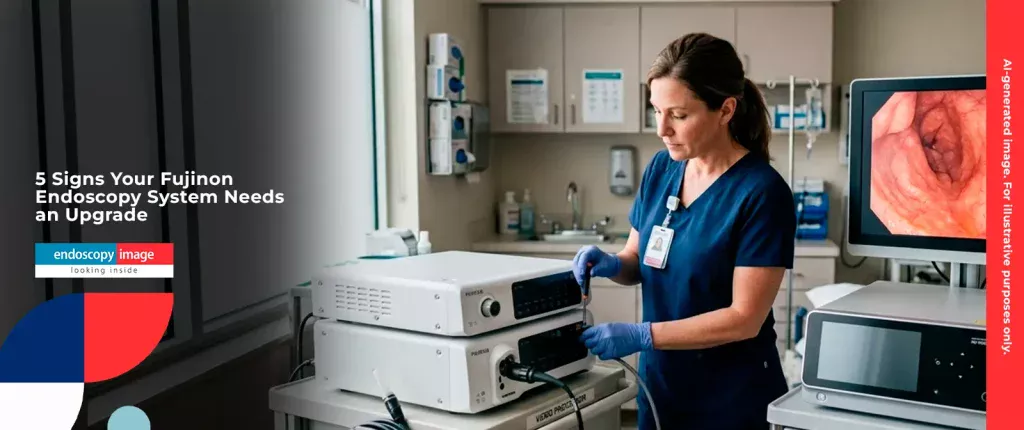
5 Signs Your Fujinon Endoscopy System Needs an Upgrade
Every Fujinon video processor eventually reaches a point where repairs, image quality, or missing diagnostic modes start limiting what your clinic can offer. Here's how to recognize that point before it becomes a patient-safety or revenue problem — and what your realistic upgrade paths look like.
Fujinon endoscopy systems — video processors like the EPX-4450HD or the ELUXEO VP-7000, paired with their compatible gastroscopes and colonoscopes — are built for years of clinical service. But "built to last" doesn't mean "never needs replacing." The question most clinic owners and GI department heads actually face isn't if they'll eventually upgrade, but when the math tips from "keep repairing" to "time to replace."
This guide walks through the practical signals worth watching, grounded in how the industry itself talks about endoscope lifecycle, reprocessing risk, and platform obsolescence — not guesswork.
1. Image Quality No Longer Meets What Referring Physicians and Patients Expect
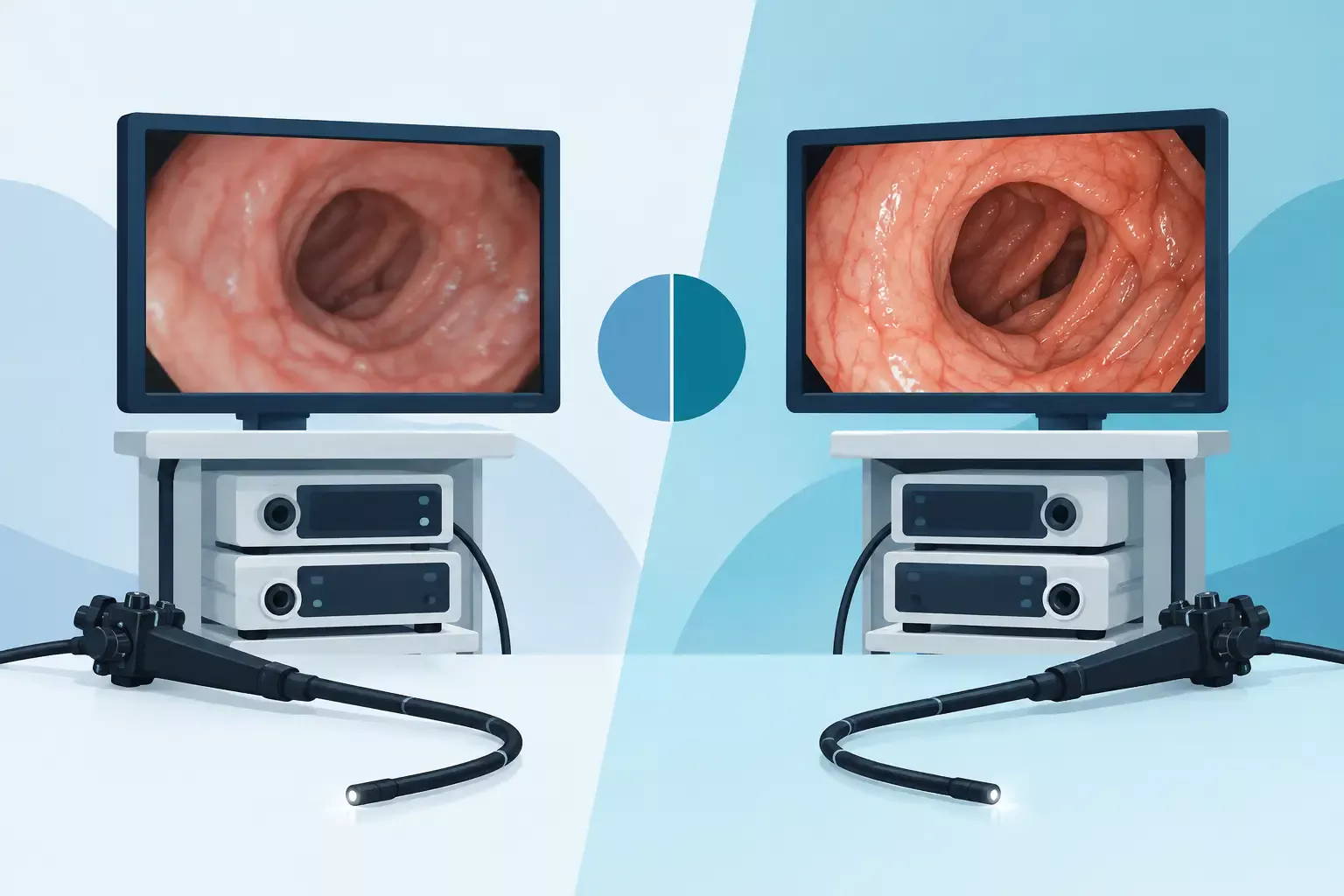
Clinical SignalEndoscopic imaging technology has moved quickly. Fujifilm's current-generation ELUXEO platform — the VP-7000/BL-7000 system, already available pre-owned through Endoscopy Image — brought Linked Color Imaging (LCI) and Blue Light Imaging (BLI) to the Fujinon lineup, both designed to improve visualization of mucosal and vascular detail during diagnostic procedures. Fujifilm's roadmap has since moved further, with a newer ELUXEO 8000 platform announced in late 2025 — a sign of where the technology is headed, even though that specific generation is still too new to appear on the pre-owned market.
If your current Fujinon system is still running standard-definition or early HD imaging without LCI/BLI-class enhancement, that's not a cosmetic gap — it directly affects polyp and lesion detection during procedures. When physicians in your network start comparing your equipment unfavorably to what they see at other facilities, that's a concrete signal, not just a preference issue.
2. Repairs Are Becoming Frequent, Not Occasional
Operational SignalThe practical takeaway: if your Fujinon processor or scopes are going in for repair multiple times within the same year — and each repair addresses a different component — that pattern usually means the system is nearing the end of its practical service life, not just having a run of bad luck. Track your service tickets. A rising frequency, even without a big single failure, is the earliest reliable warning sign.
3. Reprocessing and Compliance Risk Is Creeping Up
Compliance SignalReprocessing risk isn't just about the endoscope's age — it's about how well the system's design and documentation support consistent, validated cleaning. ECRI's 2026 Health Technology Hazards report flags variability in manufacturer reprocessing instructions as an ongoing patient-safety concern, and specifically recommends that healthcare organizations assess reprocessing instructions for use (IFUs) as part of any purchasing decision — not just for new equipment, but as an ongoing risk-management practice for equipment already in service.
4. New Fujinon Scopes No Longer Match Your Older Processor
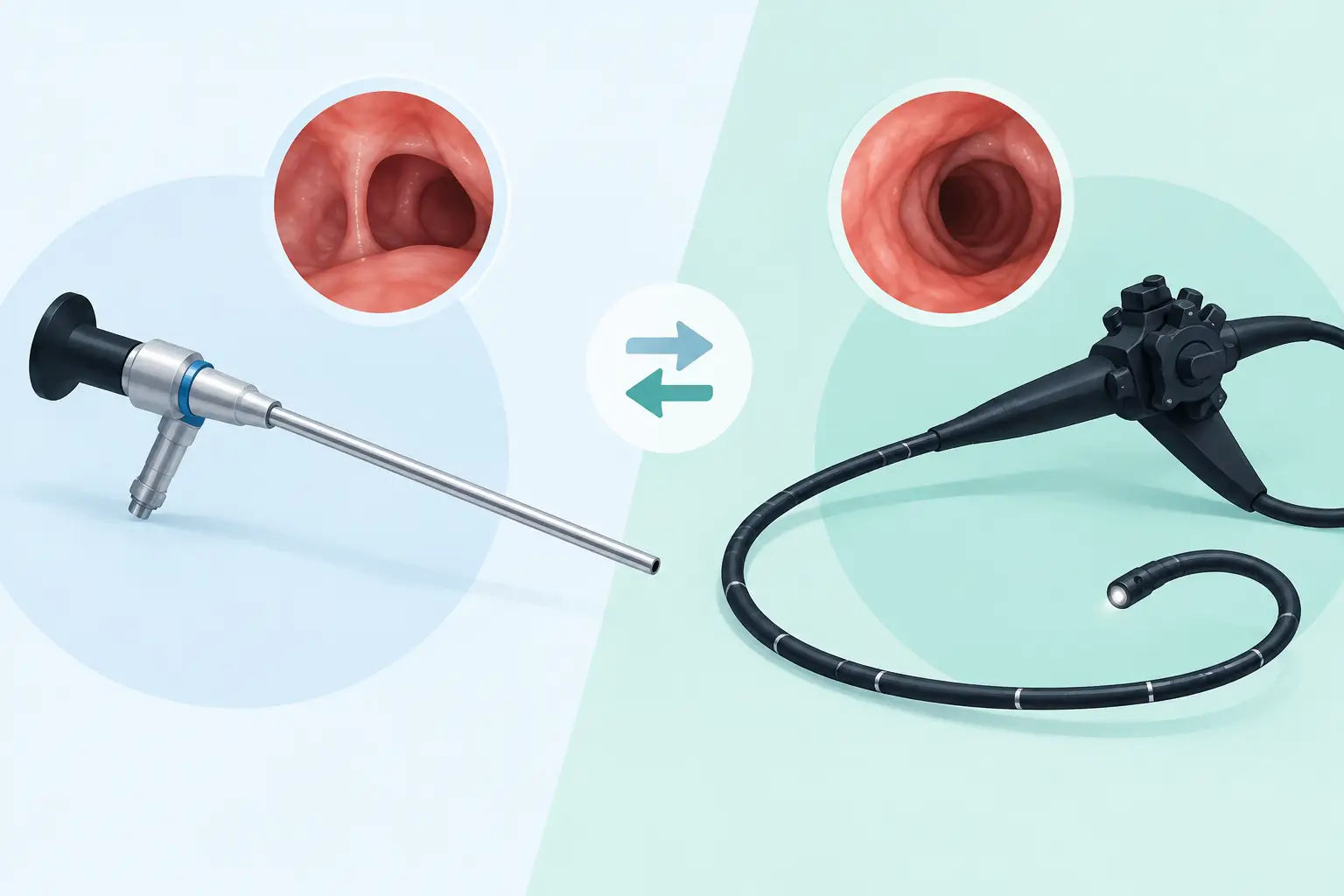
Compatibility SignalOne detail worth understanding before you buy a replacement scope for an older Fujinon processor: Fujifilm has been moving toward broader cross-generation compatibility with its ELUXEO platforms. The VP-7000/BL-7000 system, for example, works across Fujinon's 500-, 600-, and 700-series scopes — a real advantage if your clinic has scopes from more than one generation. Fujifilm has extended this approach further with the newer ELUXEO 8000, though that platform isn't yet part of the pre-owned market.
If you're finding that newer Fujinon-compatible scopes on the market won't pair cleanly with your existing processor's software or connector generation, that's a sign your processor — not necessarily your scopes — is the bottleneck. In that scenario, upgrading the processor alone (rather than the full stack) is often the more cost-effective path.
5. You're Missing Diagnostic Modes Your Peers Already Have
Competitive SignalSystems still on standard xenon light sources
Older platforms rely on xenon lamps, which have a finite bulb life and don't support LED-based multi-light imaging modes like LCI and BLI.
Current LED multi-light platforms
Fujifilm's ELUXEO line uses independently regulated LED light sources, which the manufacturer states improves illumination consistency and enables imaging modes like LCI and BLI — already available on the VP-7000/BL-7000 system.
If competing clinics or hospitals in your referral network are already promoting LCI or BLI-enhanced procedures and yours isn't, that's both a clinical and a marketing gap worth quantifying internally before it affects referral volume.
Decision Framework: Keep, Repair, or Upgrade?
Keep As-Is
Repairs are rare and isolated, image quality still meets clinical needs, and reprocessing passes validation consistently.
Repair & Monitor
One component is failing, but the rest of the system is sound. Fix it, but start budgeting for replacement within the next cycle.
Time to Upgrade
Multiple repairs per year, compatibility gaps with new scopes, or missing imaging modes that affect diagnostic capability.
Why a Pre-Owned Fujinon System Is Often the Responsible Upgrade Path
Replacing an entire endoscopy stack with brand-new equipment isn't always financially realistic, especially for independent clinics and ambulatory centers. A carefully inspected, pre-owned Fujinon system — sourced from a supplier that tests functionality and provides documentation before sale — lets you move to a more capable, better-supported platform without the full cost of new equipment.
At endoscopyimage.com, every pre-owned Fujinon system goes through functional testing before it's listed. If you want to see what a current-generation, currently-available Fujinon platform looks like in detail, our complete guide to the ELUXEO VP-7000/BL-7000 system is a good next stop. Explore current inventory across our full endoscopy equipment catalog, or go directly to video gastroscopes and colonoscopy equipment if you already know which component needs replacing. If your upgrade also touches your surgical stack, our video surgery equipment catalog covers that side of the department too.
Frequently Asked Questions
How long does a Fujinon endoscopy system typically last?
There's no fixed number that applies to every facility — flexible endoscope lifespan depends heavily on handling, reprocessing discipline, and usage volume, and this holds true across brands, not just Fujinon. Well-maintained systems can remain clinically usable for many years, while heavily used or poorly maintained equipment may need major repairs much sooner.
Is pre-owned Fujinon equipment reliable for clinical use?
Pre-owned Fujinon equipment can be a reliable option when it has been functionally tested and comes with documentation from the seller. As with any pre-owned medical device, the key is verifying test records and post-sale support terms before purchase — Endoscopy Image labels all Fujinon equipment as pre-owned and provides functional testing prior to sale.
What's the difference between older Fujinon processors and the current ELUXEO platform?
The ELUXEO VP-7000/BL-7000, currently available pre-owned through Endoscopy Image, uses LED multi-light technology instead of xenon lamps and supports imaging modes like LCI and BLI that older Fujinon processors lack. Fujifilm has continued developing the ELUXEO line since then, but those newer releases haven't reached the pre-owned market yet.
Should I replace my processor and scopes at the same time?
Not necessarily. If your processor is the limiting factor — for example, it can't support newer scope generations or lacks LCI/BLI imaging — upgrading the processor alone is often more cost-effective than replacing the entire stack, provided compatibility is confirmed first.
Not Sure Where Your Fujinon System Stands?
Talk to our team about your current setup — we'll help you figure out whether a repair, a partial upgrade, or a full pre-owned system replacement makes the most sense for your clinic.
Get a Personalized Quote