Laparoscopic Camera Systems: How to Choose the Right Setup for Your OR
A laparoscopic camera system is the visual foundation of every minimally invasive surgery. The surgeon's ability to navigate anatomy, identify structures, and make precise decisions depends directly on the quality and reliability of the imaging system in front of them.
Yet choosing the right system for your operating room is not straightforward. Resolution, light source compatibility, brand ecosystem, procedure types, and budget all play a role — and the differences between available systems are meaningful in practice.
This guide covers the key components of a laparoscopic camera system, the specialties they serve, the leading platforms from Stryker and Karl Storz available through Endoscopy Image, and the practical questions every surgical center administrator should ask before purchasing.
Fundamentals
What Is a Laparoscopic Camera System?
A laparoscopic camera system — also referred to as a surgical camera system or endoscopic imaging system for the OR — is the core imaging infrastructure used in minimally invasive procedures. It captures and processes the visual feed from a rigid endoscope or laparoscope and displays it on a surgical monitor for the operating team.
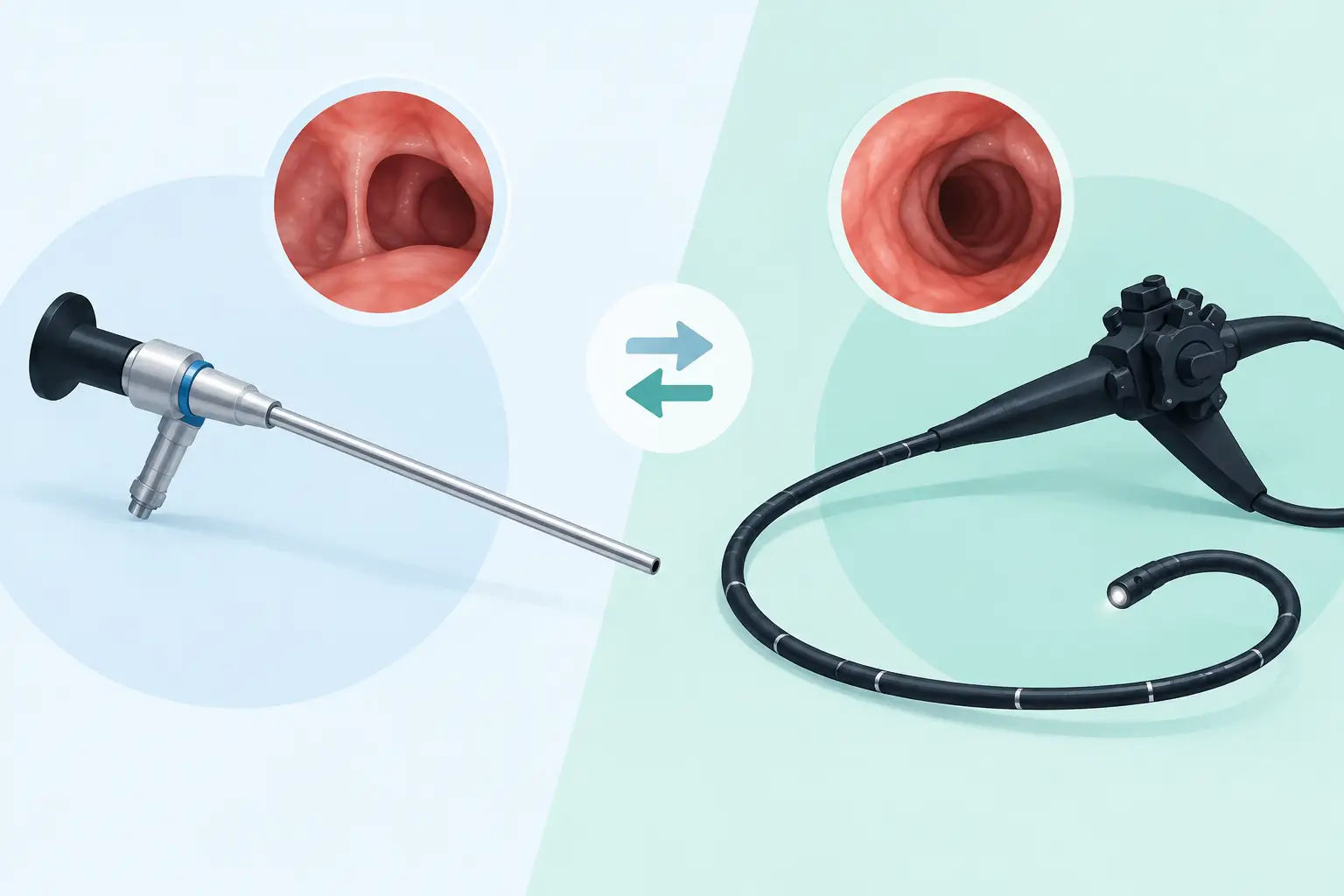
Unlike flexible endoscopy systems used in digestive endoscopy, laparoscopic systems work with rigid instruments inserted through small incisions (trocars). The camera head attaches directly to the eyepiece of the rigid scope and transmits the image to the camera control unit (CCU), which processes and outputs the signal to the monitor.
Core components of a complete laparoscopic imaging setup
Camera Control Unit (CCU)
The central processing unit of the imaging system. Receives the raw image signal from the camera head, processes it, and outputs to the monitor. Resolution, color rendering, and image enhancement technologies are determined here.
Camera Head
Attaches to the eyepiece of the rigid scope. Contains the image sensor (CCD or CMOS). Must be compatible with the CCU it connects to — camera heads are generally brand- and series-specific.
Light Source
Provides illumination through a fiber optic cable connected to the rigid scope. Xenon light sources are the established standard for their color temperature and brightness consistency. LED light sources are increasingly common in newer platforms.
Rigid Endoscope / Laparoscope
The optical instrument inserted into the body cavity. Available in different diameters (typically 5mm or 10mm) and viewing angles (0°, 30°, 45°). Must be compatible with the camera head attached to it.
Surgical Monitor
Displays the processed image for the surgical team. Medical-grade monitors are designed for the OR environment — appropriate brightness levels, screen coatings, and signal compatibility with the CCU output.
Applications
Which Surgical Specialties Use Laparoscopic Camera Systems?
Video surgery equipment built around laparoscopic imaging platforms is used across a wide range of minimally invasive surgical specialties. The same camera system can often serve multiple procedure types when paired with the appropriate rigid scope.
Laparoscopy
Abdominal and pelvic procedures — cholecystectomy, appendectomy, hernia repair, bariatric surgery
Arthroscopy
Joint visualization and surgery — knee, shoulder, hip, wrist procedures
Gynecology
Laparoscopic hysterectomy, myomectomy, endometriosis treatment, tubal procedures
Urology
Cystoscopy, ureteroscopy, nephrectomy, prostatectomy, laparoscopic urology
Thoracoscopy
VATS (video-assisted thoracic surgery) — lung resection, pleural procedures
Neurosurgery
Endoscopic procedures — ventricular, spinal, and skull base approaches
The breadth of specialties served by modern surgical camera platforms makes them one of the most strategically important equipment investments for any surgical center. A well-chosen system can support multiple OR suites and procedure types across the same facility.
Technical Guide
HD vs. 4K Laparoscopic Imaging: What Actually Changes in the OR
The shift from HD to 4K in surgical camera systems follows the same resolution trajectory as consumer displays — but in the OR, the practical implications go beyond pixel count.
| Feature | HD Systems | 4K Systems |
|---|---|---|
| Resolution | 1920 × 1080 pixels | 3840 × 2160 pixels (4× HD) |
| Anatomical detail | Strong for standard laparoscopy | Enhanced fine tissue and vascular detail |
| Monitor requirement | Compatible with HD surgical monitors | Requires 4K-capable surgical monitor |
| Typical use case | General MIS, arthroscopy, standard laparoscopy | Complex dissection, high-precision procedures |
| Secondary market availability | High | Moderate |
| Example systems | Stryker 1288, 1488, 1588 · Karl Storz IMAGE 1 | Stryker 1688 AIM 4K |
Brand Overview
Stryker Surgical Camera Systems
Stryker is one of the most widely adopted brands in minimally invasive surgical imaging globally. Their camera systems are designed for demanding OR environments, with an emphasis on image quality, system integration, and durability across high-volume surgical settings.
All Stryker systems available through Endoscopy Image are pre-owned units sourced through lawful secondary market channels.
| System | Resolution | Key Features | Best For | Positioning |
|---|---|---|---|---|
| Stryker 1688 AIM 4K | 4K UHD | Fluorescence Imaging, AutoLight adaptive brightness, full Stryker platform integration | High-complexity laparoscopy, advanced MIS | Advanced |
| Stryker 1588 | Full HD | High color fidelity, precise anatomical detail, robust OR integration | Laparoscopy, arthroscopy, general MIS | High Performance |
| Stryker 1288 | HD | Broad Stryker rigid scope compatibility, multi-specialty versatility, wide installed base | Laparoscopy, arthroscopy, multi-specialty OR | Proven Reference |
| Stryker 1488 | HD | Compact design, reliable imaging, compatible with Stryker rigid endoscopes | MIS centers seeking cost-effective performance | Cost-Benefit |
Stryker 1688 AIM 4K — Fluorescence Imaging explained
The Stryker 1688 AIM 4K includes Fluorescence Imaging capability. This technology, when used with a compatible fluorescent agent and appropriate filter, enables visualization of tissue perfusion and certain anatomical structures that are not readily visible under standard white light. The clinical applicability of fluorescence imaging depends on the procedure type, regulatory clearance in the relevant market, and the specific fluorescent agent used. It is not a standard feature of all laparoscopic procedures.
Brand Overview
Karl Storz Surgical Imaging Systems
Karl Storz has built its reputation on precision optical engineering. The brand is closely associated with high-quality rigid endoscopes and laparoscopes — and their imaging systems are designed to integrate tightly with that optical ecosystem.
- Image quality: High-definition imaging with advanced color optimization — precise tissue differentiation for the surgical field
- Integration: Designed to work seamlessly with the full Karl Storz rigid endoscope and laparoscope lineup
- Specialties supported: Laparoscopy · Urology · Gynecology · Orthopedics · General Surgery
- Versatility: Multi-specialty capability makes the IMAGE 1 a strong choice for surgical centers performing procedures across different departments
Karl Storz's strength lies in the coherence of their system: camera, rigid scope, and light source are engineered to work together. Facilities that invest in Storz rigid scopes benefit most from pairing them with the IMAGE 1 system. Cross-brand mixing (Storz scope with non-Storz camera) may work in some configurations but is not the manufacturer's recommended setup and can affect image quality.
Comparison
Stryker vs. Karl Storz: A Practical Comparison
Both Stryker and Karl Storz are established leaders in minimally invasive surgical imaging. The right choice for a given facility depends less on brand prestige and more on practical factors: specialty mix, existing equipment, surgeon preference, and procurement budget.
| Criterion | Stryker | Karl Storz |
|---|---|---|
| Resolution range | HD to 4K UHD (1288 → 1688 AIM) | HD (IMAGE 1) |
| Fluorescence imaging | Available on 1688 AIM 4K | Not listed in available catalog |
| Specialty breadth | Laparoscopy, arthroscopy, general MIS | Laparoscopy, urology, gynecology, orthopedics |
| Rigid scope ecosystem | Broad Stryker scope line | Extensive Storz rigid endoscope catalog |
| Secondary market availability | Strong | Strong |
| Best when | Center needs 4K or fluorescence; broad multi-specialty MIS | Center is already in the Storz ecosystem or prioritizes urology/gynecology |
Decision Guide
Which Laparoscopic Camera System Is Right for Your Surgical Center?
When 4K and fluorescence are clinical priorities
High-complexity laparoscopy, advanced abdominal surgery, centers where enhanced anatomical visualization is part of the surgical protocol. Requires compatible 4K monitor.
When HD performance and proven versatility are the priority
General laparoscopy, arthroscopy, multi-specialty surgical centers. Strong installed base and secondary market availability. Reliable cost-benefit positioning.
When your OR is already in the Storz ecosystem
Facilities with existing Storz rigid scopes in urology, gynecology, or laparoscopy. The IMAGE 1 is optimized for Storz optics and delivers best results in that configuration.
When budget efficiency is the primary constraint
Smaller surgical centers, satellite ORs, or facilities adding a second procedure room. Compact, reliable, compatible with the Stryker scope line.
Before You Buy
6 Things to Verify Before Purchasing a Laparoscopic Camera System
Confirm camera head and CCU compatibility
Camera heads are typically series-specific. A Stryker 1688 camera head is not interchangeable with a 1288 CCU. Verify the exact pairing before purchasing any component separately.
Match the light source to your system
Xenon light sources are the standard for laparoscopy. Confirm the light source type, wattage, and cable compatibility with your rigid scope. A mismatched light source directly affects image brightness and color.
Verify monitor compatibility if upgrading to 4K
A 4K CCU requires a 4K surgical monitor to deliver its full resolution. If your OR monitors are HD, upgrading to the Stryker 1688 without also upgrading the monitor will not yield 4K imaging.
Check rigid scope compatibility
Rigid scopes (laparoscopes, arthroscopes) from different manufacturers are not always interchangeable at the camera head level. Confirm that your existing or planned rigid scopes are compatible with the camera system you select.
Ask about sourcing and equipment history
For any pre-owned system, request documentation of its origin and condition. A reputable supplier will be transparent. If provenance cannot be confirmed, that is a signal to look elsewhere.
Plan the full OR tower, not just the camera
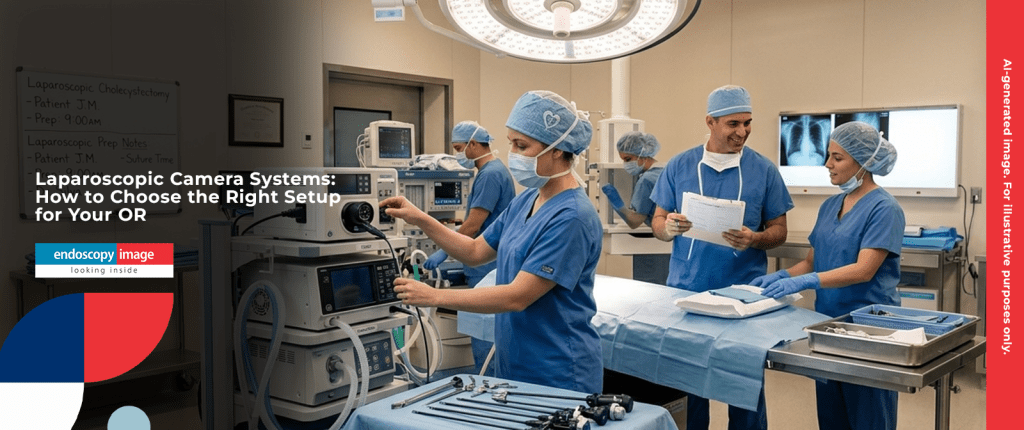
A complete laparoscopic OR tower typically includes: CCU + camera head, light source + fiber cable, insufflator (for laparoscopy), monitor(s), and a medical cart. Purchasing components in isolation without planning the full setup creates gaps.
About Us
Endoscopy Image: Pre-Owned Video Surgery Equipment Worldwide
Endoscopy Image, operated by Are Medical LLC and headquartered in Key Biscayne, Miami, Florida, has been supplying hospitals, surgical centers, and clinics with medical equipment for over 30 years. We carry pre-owned video surgery equipment from Stryker and Karl Storz, as well as endoscopy equipment, video gastroscopes, and colonoscopy equipment from Olympus (refurbished), Pentax, and Fujinon.
All equipment we sell consists of pre-owned products acquired through lawful secondary market channels. We operate with full transparency about sourcing and condition — worldwide delivery available.
Looking for a Laparoscopic Camera System for Your OR?
Browse our catalog of pre-owned Stryker and Karl Storz video surgery equipment and contact our team to discuss availability, compatibility, and pricing. Worldwide delivery available.
FAQ
Frequently Asked Questions
What is included in a laparoscopic camera system?
A complete laparoscopic camera system typically includes a camera control unit (CCU), a camera head, a light source, and a fiber optic cable. For a fully operational OR setup, you also need a compatible rigid endoscope or laparoscope and a surgical monitor. All components must be compatible with each other — camera heads and CCUs are generally brand- and series-specific.
What is the difference between the Stryker 1688 AIM 4K and the Stryker 1288?
The Stryker 1688 AIM 4K is a more recent platform offering 4K UHD resolution and Fluorescence Imaging capability, designed for high-complexity minimally invasive procedures. The Stryker 1288 is an HD camera system with a broad installed base, widely used across laparoscopy, arthroscopy, and general MIS. The 1288 is a proven, cost-effective option; the 1688 is suited for centers where 4K imaging and fluorescence are clinical priorities and a compatible 4K monitor is available.
Can I use a Stryker camera head with a Karl Storz rigid scope?
In some cases, cross-brand adapters exist that allow camera heads from one manufacturer to attach to rigid scopes from another. However, this is not a manufacturer-recommended configuration and may affect image quality, color rendering, or optical performance. For best results, it is generally advisable to keep camera and scope within the same brand ecosystem, or to confirm compatibility specifically with your supplier before purchasing.
Is pre-owned laparoscopic camera equipment a reliable option for surgical centers?
Pre-owned surgical camera systems sourced through verified secondary market channels are used by surgical centers around the world as a cost-effective alternative to new equipment. The key factors are the reliability of the supplier, transparency about the equipment's origin and condition, and confirmation of functional status prior to purchase. As with any medical device procurement, due diligence on sourcing is essential.
Does Endoscopy Image supply laparoscopic camera systems internationally?
Yes. Endoscopy Image supplies pre-owned video surgery equipment — including Stryker and Karl Storz camera systems — to hospitals, surgical centers, and resellers worldwide. The company is headquartered in Key Biscayne, Miami, Florida. For availability, pricing, and shipping details, contact the team directly at endoscopyimage.com.